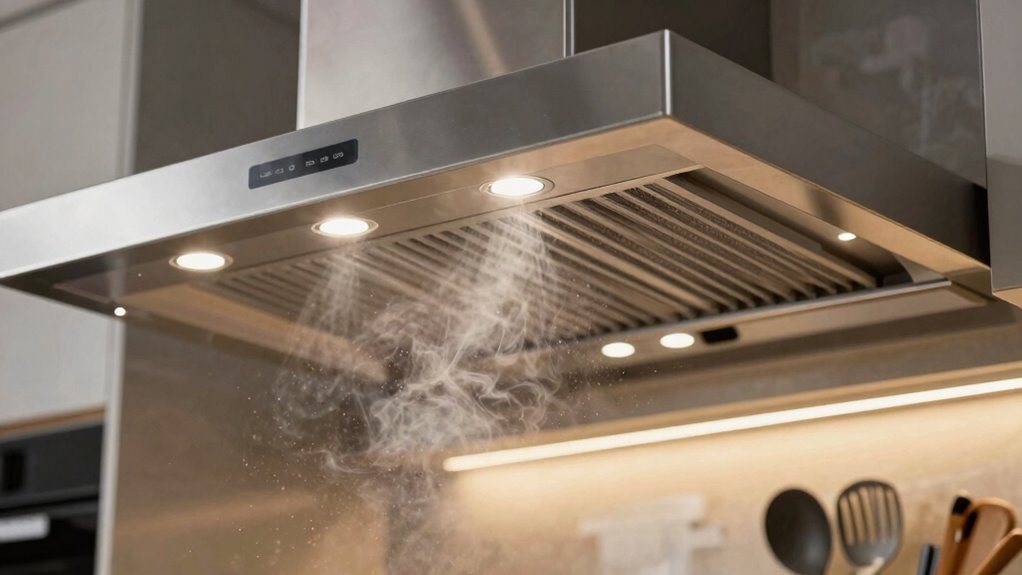

Range hoods are about more than just removing odors; they trap tiny particles like grease, smoke, and bacteria that can settle on surfaces and pollute your indoor air. These particles can cause health issues like allergies and respiratory problems. Proper filtration and ventilation guarantee you breathe cleaner air and keep your kitchen healthier. If you want to understand how these particles impact your indoor environment and how range hoods fight them, keep exploring the details.
Key Takeaways
- Range hoods capture airborne particles like grease, smoke, and bacteria, preventing them from settling on surfaces and contaminating indoor air.
- Particle filtration reduces health risks such as respiratory issues and allergies caused by airborne contaminants.
- Effective filtration improves overall air quality, making the kitchen safer and cleaner during and after cooking.
- Removing particles helps prevent lingering pollutants that can cause long-term indoor air pollution.
- Focusing on particles ensures better ventilation and air exchange, maintaining a healthier indoor environment.
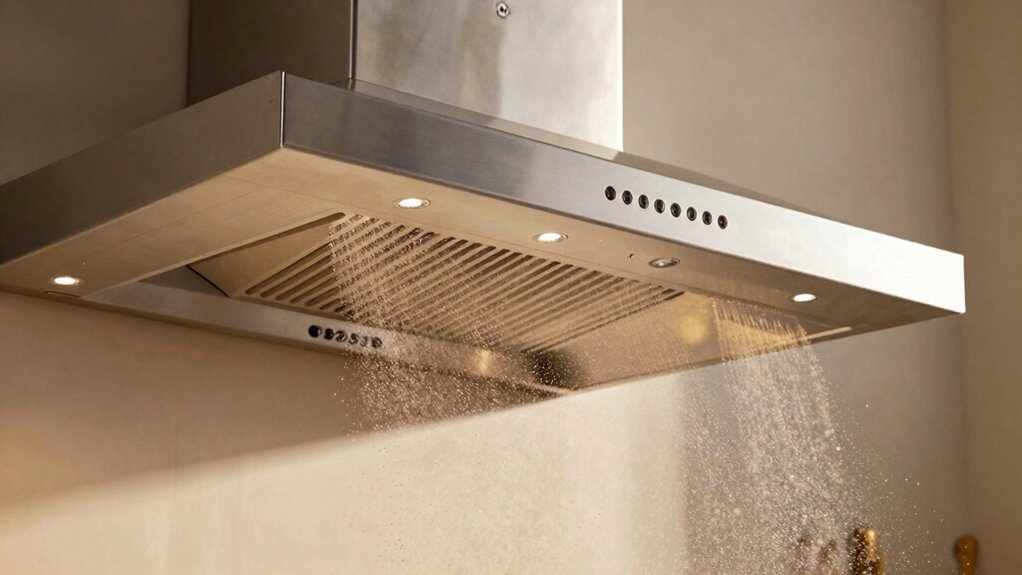
When cooking, your range hood plays a crucial role in trapping and removing airborne particles that can accumulate in your kitchen. While many people focus on how well it clears out smells, its importance extends far beyond that. Range hoods are indispensable for air filtration, capturing tiny grease particles, smoke, and even bacteria that can linger in the air after cooking. These particles can settle on surfaces, contribute to indoor air pollution, and affect your health over time. Proper air filtration guarantees that the air you breathe remains cleaner, reducing the risk of respiratory issues and allergies. A high-quality range hood pulls in contaminated air and filters out these tiny particles, making your kitchen a healthier environment. Additionally, particle filtration efficiency is a key factor to consider when choosing a range hood, as it directly impacts how well airborne contaminants are removed. Enhancing air quality through effective filtration can improve overall well-being in your home.
Furthermore, considering air exchange rate can help ensure that your kitchen remains well-ventilated and free of lingering pollutants during cooking. Another critical factor to contemplate is noise levels. Many homeowners shy away from powerful range hoods because they fear loud operation might disrupt their daily routines or conversations. However, modern designs aim to strike a balance between strong air filtration and quiet operation. You should look for a range hood that offers effective particle removal without creating an overwhelming noise. When functioning at ideal levels, a well-designed hood operates quietly enough to keep your kitchen atmosphere comfortable, whether you’re cooking dinner or just relaxing nearby. Noise levels matter because they influence how often you use your range hood and how seamlessly it fits into your daily life. Additionally, soundproofing features often contribute significantly to reducing noise without sacrificing performance.

BREETEE Portable Range Hood Kitchen–5-Layer Filter Compact Desktop Exhaust Fan, Powerful 3-Speed Smoke Removal, Low Noise Countertop Range Hood, Oil Cup, for Apartments, Dorm, RV, Indoor BBQ–Off-white
- Portable Design: Ideal for small spaces and on-the-go use
- No Installation Needed: Plug-and-play with a 70-inch cord
- 5-Layer Filtration System: Captures grease, smoke, and odors effectively
As an affiliate, we earn on qualifying purchases.
As an affiliate, we earn on qualifying purchases.
Frequently Asked Questions
How Do Range Hoods Filter Tiny Airborne Particles?
Range hoods filter tiny airborne particles through a combination of strong airflow efficiency and effective filters. As smoke and grease particles rise, the hood pulls air in quickly, trapping particles in high-quality filters like metal or charcoal. To keep it working well, you need regular filter maintenance—cleaning or replacing filters guarantees peak airflow performance and keeps airborne particles from lingering in your kitchen.
What Types of Particles Do Range Hoods Remove Most Effectively?
Range hoods most effectively remove small airborne particles like grease, smoke, and allergens, which vary in particle size. You’ll want a hood with a high-quality filter material, such as a HEPA or activated carbon filter, designed to trap these tiny particles. These filters excel at capturing particles as small as 0.3 microns, ensuring cleaner air in your kitchen and reducing health risks associated with airborne contaminants.
Can Range Hoods Improve Indoor Air Quality Beyond Odors?
Did you know that cooking fumes can contain tiny particles linked to respiratory issues? Range hoods do more than just remove odors—they improve indoor air quality by filtering out these harmful particles. They also help control humidity from steam, preventing mold growth. By actively venting out pollutants and moisture, your range hood creates a healthier environment, making your kitchen safer and more comfortable to cook in.
Are There Specific Filters Better at Trapping Particles?
Yes, certain filters are better at trapping particles. Look for filters with high-quality filter material, like HEPA or activated charcoal, which effectively capture tiny particles and airborne contaminants. Regular filter maintenance is essential to keep your range hood working efficiently; clean or replace filters as recommended. Choosing the right filter material and maintaining it properly guarantees your range hood improves indoor air quality by removing more particles, not just odors.
How Often Should I Clean or Replace Range Hood Filters?
Think of your range hood filters as the frontline warriors against cooking fumes; they need your care to stay fierce. You should clean them every 1-3 months, depending on how often you cook. Replace filters when they become worn or greasy, usually every 6-12 months. Proper kitchen ventilation relies on fresh filters, ensuring airborne particles are kept at bay, and your cooking space remains clean, safe, and inviting.
Conclusion
So, next time you turn on your range hood, remember it’s not just about masking smells. It’s about capturing those tiny particles that can affect your health. Isn’t it worth taking a moment to reflect on what’s really being pulled out of your kitchen air? Investing in a good range hood means better air quality and peace of mind. After all, shouldn’t your home be as clean and safe as possible?