To improve your indoor air quality, rotate cleaning tasks like dusting high surfaces, vacuuming, and mopping on different days to prevent dust buildup and allergens. Use HEPA vacuums and damp cloths for thorough cleaning. Focus on ventilating by opening windows or running exhaust fans during specific chores. Regularly replace filters on air purifiers, and position them where air circulation is strongest. Keep exploring ways you can optimize your cleaning routine for cleaner air.

Get garden gear delivered free with Prime
- Fast, free delivery on millions of items
- Prime Video, Amazon Music and more included
- Member-only deals all year
Key Takeaways
- Schedule dusting and vacuuming on different days, focusing on high-traffic areas to reduce airborne particles regularly.
- Rotate cleaning tasks to include both surface cleaning and ventilation to maximize air quality improvement.
- Use HEPA-filter vacuums and damp cloths consistently, alternating with dry cleaning methods to minimize dust and allergens.
- Incorporate indoor plants and air purifiers into your routine, rotating their placement to optimize pollutant removal.
- Open windows or run exhaust fans after cleaning sessions to enhance air circulation and reduce indoor toxin levels.
Have you ever wondered how your cleaning habits affect your indoor air quality? The way you manage household chores can considerably influence the air you breathe every day. A key strategy involves balancing traditional cleaning routines with methods that actively improve air quality. Incorporating indoor plants and air purifiers into your cleaning schedule can make a notable difference. Indoor plants aren’t just decorative; they naturally filter out toxins like formaldehyde, benzene, and trichloroethylene, which can accumulate from household products, furniture, and paint. By placing a few plants in common areas, you introduce a natural purification process, reducing airborne pollutants without extra effort. Just make sure you choose low-maintenance varieties like snake plants, pothos, or peace lilies, and keep their leaves dust-free for maximum benefit.
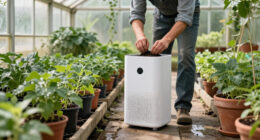
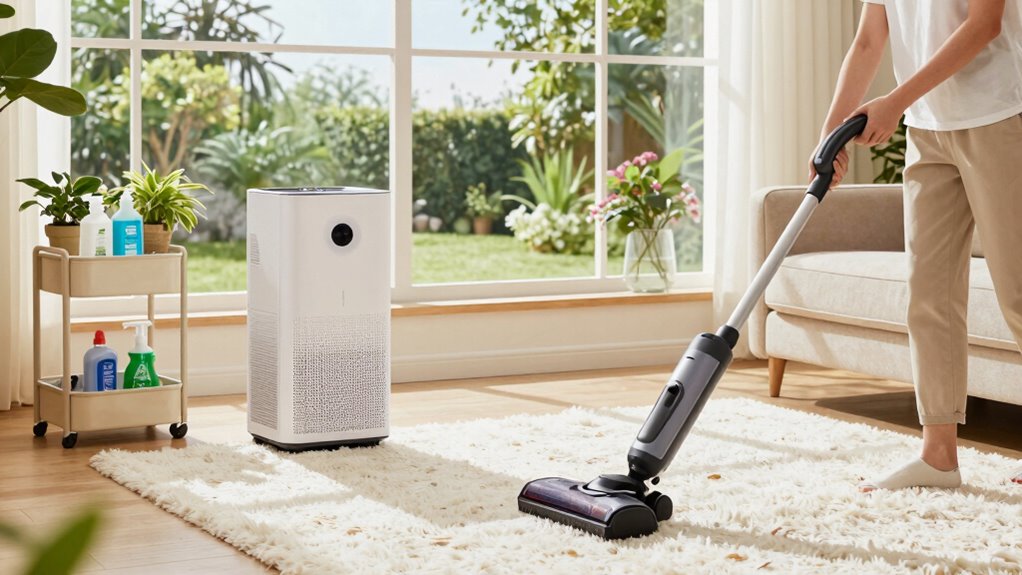
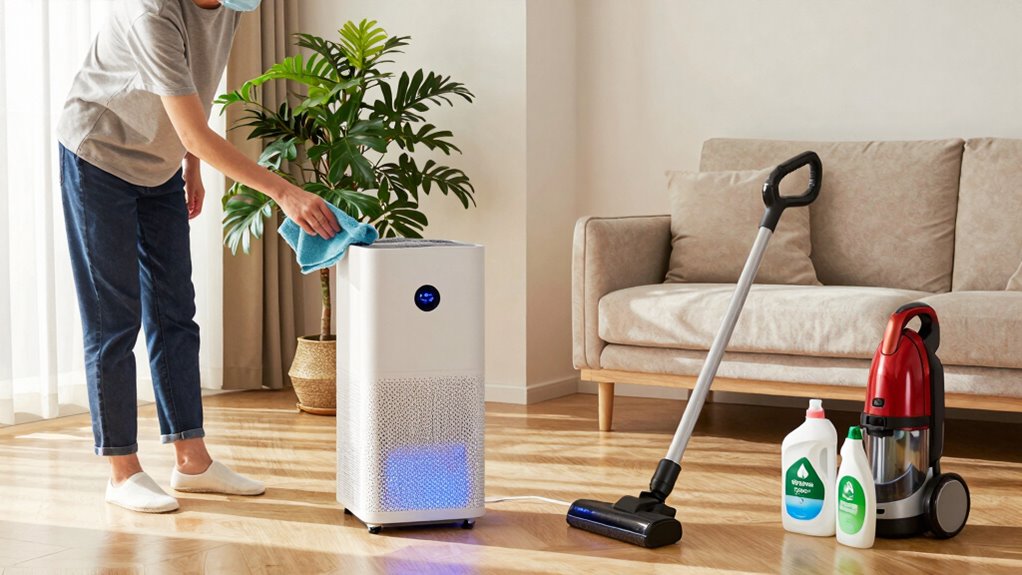
Alongside plants, air purifiers serve as an efficient, targeted way to clean indoor air. When you run an air purifier equipped with HEPA filters, it captures dust, pet dander, mold spores, and other allergens that can compromise air quality. To optimize their effectiveness, position them in rooms where you spend most of your time, like your living room or bedroom, and run them regularly, especially during or after cleaning sessions. This helps prevent dust and particles stirred up during chores from lingering in the air. Rotating your cleaning tasks—such as vacuuming, dusting, and mopping—on different days ensures you’re consistently removing sources of indoor pollution without overwhelming your schedule. For example, dusting high surfaces and ceiling fans on one day prevents dust from settling and becoming airborne later.
Additionally, when you vacuum, use a machine with a HEPA filter to trap microscopic particles. Regularly changing or cleaning filters keeps the purifier working at peak performance. Mopping floors with damp cloths or microfiber mops helps pick up dust and allergens that vacuums might miss, especially on hard surfaces. To further improve air quality, pay close attention to ventilation. Open windows when weather permits and run exhaust fans in the kitchen and bathroom to clear out moisture and airborne pollutants. Proper ventilation is essential for maintaining healthy indoor air quality and preventing mold growth, which can worsen air quality over time. Ensuring proper air circulation can also help disperse indoor pollutants more effectively, creating a healthier living environment. Adequate air exchange is crucial for controlling humidity and reducing indoor odors, further supporting overall air quality.
As an affiliate, we earn on qualifying purchases.
Frequently Asked Questions
How Often Should I Test My Home’s Indoor Air Quality?
You should test your home’s indoor air quality at least once every three to six months to catch indoor pollutants early. Regular testing helps you identify issues with pollutants like dust, mold, or VOCs. Improve your ventilation strategies by opening windows or using air purifiers. If anyone in your home has allergies or respiratory issues, consider more frequent testing to guarantee the air remains safe and fresh.
Are There Specific Cleaning Products That Improve Air Quality?
You’re hitting the nail on the head by asking about cleaning products that boost air quality. Opt for eco-friendly solutions like plant-based cleaners and those with HEPA filtration to trap airborne particles. These products reduce chemicals and allergens, making your space healthier. Imagine your home as a gust of fresh air—clean, pure, and inviting. Using the right products ensures you’re not just cleaning, but also nurturing your indoor environment.
Can Air Purifiers Reduce the Need for Frequent Cleaning?
Yes, air purifiers can reduce how often you need to clean, but only if you maintain them properly. Regular air purifier maintenance, like changing filters on schedule, guarantees filtering effectiveness. When your purifier works efficiently, it captures more airborne particles, lessening dust buildup and allergens. This means you can space out cleaning tasks, keeping your home fresher longer. Just remember, an effective purifier complements cleaning, not replaces it.
What Signs Indicate Poor Indoor Air Quality?
You might notice persistent odors, sneezing, or headaches, which signal poor indoor air quality. Dust buildup, visible mold, or condensation on windows also point to ventilation issues. To improve air, consider ventilation improvements and mold prevention strategies. If these signs appear, it’s time to take action—clean thoroughly, increase fresh air circulation, and address moisture problems to create a healthier living environment.
How Do Outdoor Air Conditions Affect Indoor Cleaning Routines?
Outdoor air conditions directly influence your indoor cleaning routines. When outdoor pollution levels rise due to seasonal variations, you should increase ventilation carefully or use air purifiers to reduce indoor pollutant buildup. During times of low outdoor pollution, it’s easier to open windows and air out your home. Monitoring outdoor air quality helps you decide when to ventilate or hold off, ensuring your indoor air stays healthy and clean.
Conclusion
By balancing brooming, binning, and airing, you boost your home’s air quality effortlessly. Consistently cleaning, ventilating, and verifying creates a clean, crisp environment that cares for your comfort. When you rotate routines with purpose and patience, you promote purity and peace in your space. Remember, maintaining your home’s air quality isn’t a one-time task but a continuous commitment. With mindful methods and a motivated mindset, you’ll master managing your home’s air quality with minimal fuss and maximum freshness.
Fall yard work Picks
leaf blowers
As an affiliate, we earn on qualifying purchases.