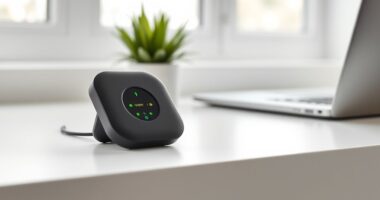
VOC monitors are helpful tools for gauging indoor air quality, but you shouldn’t expect perfect or specific chemical detection. They measure broad groups of VOCs, which means their readings can fluctuate due to environmental factors and various sources. Calibration issues and sensor limitations also affect accuracy. While they’re great for spotting potential issues and tracking trends, understanding their limits helps you use them effectively. Keep exploring to learn more about how these devices really work.

Get garden gear delivered free with Prime
- Fast, free delivery on millions of items
- Prime Video, Amazon Music and more included
- Member-only deals all year
Key Takeaways
- VOC monitors effectively track overall air quality trends but can’t identify specific chemicals precisely.
- Regular calibration and maintenance improve the reliability of VOC readings over time.
- Environmental factors like humidity and airflow influence sensor accuracy and consistency.
- These monitors serve as useful alerts for elevated VOC levels, not exact chemical concentrations.
- They are valuable for ongoing monitoring and awareness, supplementing but not replacing detailed lab analysis.
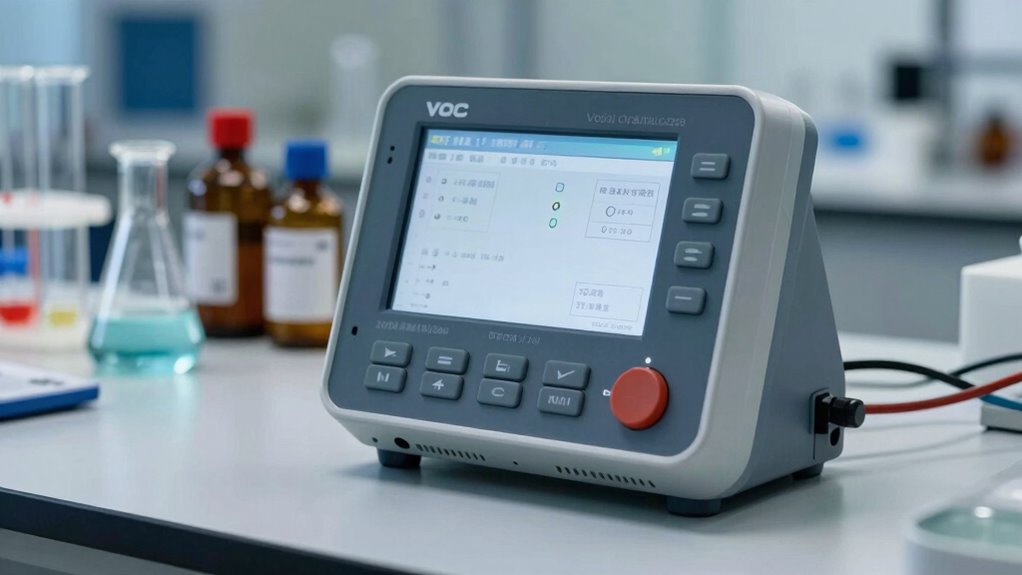
While VOC monitors are valuable tools for evaluating air quality, it’s important to understand that they don’t provide exact chemical measurements. These devices measure volatile organic compounds as a broad group, not specific chemicals, which can be confusing if you’re expecting pinpoint accuracy. One major hurdle in relying solely on VOC monitors is calibration challenges. Manufacturers calibrate these devices using reference gases, but these standards often don’t perfectly replicate real-world conditions. As a result, the readings you get can be off by a margin, sometimes considerably so. Calibration is a continuous process, and if not maintained properly, the device’s accuracy declines over time. This ongoing process is crucial to maintain monitor reliability and ensure more consistent readings. Beyond calibration issues, real-world variability plays a vital role in how reliable VOC monitor readings are. Indoor environments, for example, feature a mix of chemicals from cleaning products, building materials, and human activity. These sources can cause fluctuations that a single sensor might struggle to interpret correctly. External factors like temperature, humidity, and airflow also affect the measurements. For instance, high humidity can cause certain sensors to underreport VOC levels, while drafts can lead to inconsistent readings. Moreover, understanding the limitations of detection can help set realistic expectations when interpreting the data. Additionally, the complex mixture of chemicals present in real-world environments makes it difficult for sensors to distinguish specific compounds accurately. Even advanced sensors face challenges in chemical specificity, making it tough to identify individual VOCs precisely. So, even if your device is properly calibrated, the actual environment can cause the monitor to produce variable results day to day, or even hour to hour.
Because of these challenges, it’s best to think of VOC monitors as guides rather than precise instruments. They can alert you to potential issues, like elevated VOC levels in a room, but shouldn’t be relied upon for exact chemical identification or concentration. If you need detailed data, lab analysis or more sophisticated testing methods are necessary. However, for everyday monitoring and general awareness, these devices are invaluable. They give you a sense of how air quality changes over time and help identify potential problems.
As an affiliate, we earn on qualifying purchases.
Frequently Asked Questions
How Often Should VOC Monitors Be Calibrated for Accurate Readings?
You should calibrate VOC monitors every 3 to 6 months for accurate readings, depending on your device’s calibration frequency recommendations. Keep in mind that sensor lifespan impacts calibration needs; sensors typically last 1 to 2 years. Regular calibration guarantees your VOC monitor stays precise, especially as sensors age. If you notice inconsistent readings, consider calibrating sooner to maintain reliable monitoring and safety.
Can VOC Monitors Detect All Types of Volatile Organic Compounds?
Think of VOC monitors as a fishing net—while they catch many types of volatile organic compounds, they can’t snag every single one due to chemical specificity limits. Some VOCs slip through, especially if the sensor’s lifespan is nearing its end. So, you won’t get a complete picture of all VOCs present, but regular calibration helps guarantee your monitor stays as effective as possible within its capabilities.
Are VOC Monitors Safe for Continuous Long-Term Use?
Yes, VOC monitors are generally safe for continuous long-term use. They help you keep track of indoor air quality, alerting you to potential chemical exposure over time. However, make certain you select a reliable monitor, follow manufacturer instructions, and maintain it properly. Regular calibration is essential to keep the device accurate. With proper use, VOC monitors can effectively safeguard your indoor air, reducing health risks associated with prolonged chemical exposure.
What Are the Limitations of VOC Monitor Sensitivity?
Think of VOC monitor sensitivity like a delicate dance partner—easily thrown off if the rhythm isn’t just right. Their limitations mean they can miss subtle shifts or low concentrations, so data interpretation requires a keen eye and understanding of sensor durability. You can’t rely solely on their readings for precision; instead, use them as guides, knowing their sensitivity has boundaries that might obscure the full picture of your air quality.
How Do Environmental Factors Affect VOC Monitor Accuracy?
Environmental factors like temperature, humidity, and airflow considerably impact your VOC monitor’s accuracy in indoor air. High humidity can cause chemical interactions that skew readings, while temperature fluctuations affect sensor sensitivity. Poor airflow leads to uneven VOC distribution, making measurements less reliable. To get the best results, keep your environment stable, minimize rapid changes, and ensure proper ventilation, so your monitor can provide more consistent and useful data.
Conclusion
So, next time your VOC monitor blares, don’t expect it to be a crystal ball revealing perfect chemistry. Instead, see it as your quirky weather vane—pointing wildly in all directions, yet still guiding you through the storm. Embrace its quirks and stop chasing precision like a dog chasing its tail. After all, in the wild world of volatile organic compounds, a little unpredictability keeps life interesting—and your safety measures just a little more colorful.
Fall yard work Picks
leaf blowers
As an affiliate, we earn on qualifying purchases.