You can add DIY Corsi-Rosenthal boxes to your existing HVAC system to boost air filtration and improve indoor air quality. These affordable units use high-efficiency filters arranged in a cube shape, pulling in contaminated air and releasing cleaner air back into the room. Strategically placing multiple boxes can create an effective filtration network. If you keep exploring, you’ll discover simple steps to build and optimize these cost-effective solutions for healthier indoor spaces.
Key Takeaways
- DIY Corsi-Rosenthal boxes can be placed near existing HVAC systems to enhance overall air filtration.
- They serve as supplementary filtration units, capturing airborne pollutants before they circulate indoors.
- Customizable and easy to assemble, these boxes can be strategically positioned for maximum airflow efficiency.
- Regular filter replacement maintains optimal performance, improving indoor air quality alongside HVAC operation.
- They offer a cost-effective way to boost air cleanliness without replacing or upgrading existing HVAC equipment.
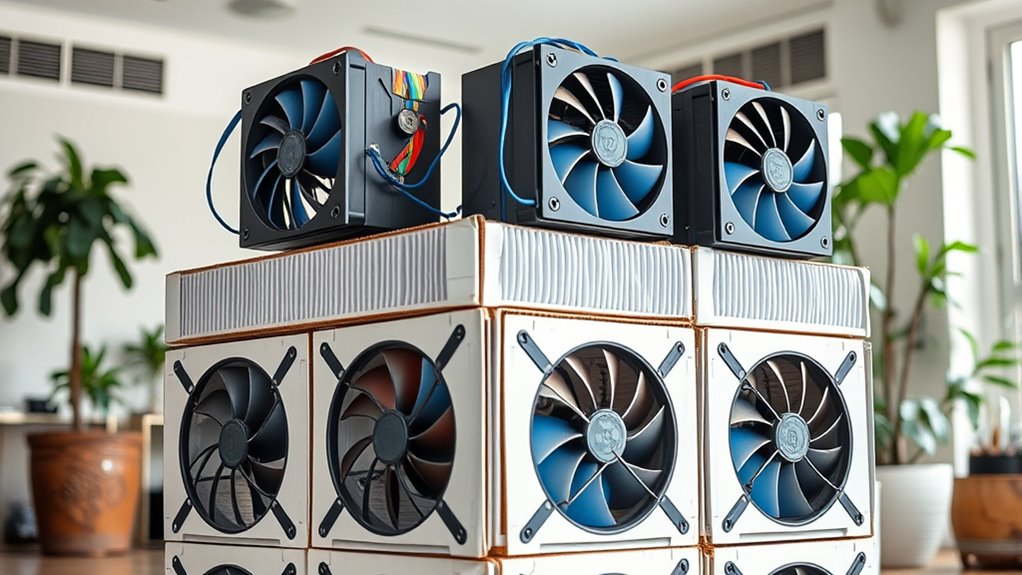
If you’re looking for an affordable way to improve indoor air quality, DIY Corsi-Rosenthal boxes offer an effective solution. These innovative air purifiers use readily available materials to create a powerful filtration system that can considerably reduce airborne pollutants. Unlike commercial air purifiers, which can be pricey, building a Corsi-Rosenthal box allows you to customize your setup while saving money. This makes it particularly appealing if you’re aiming to enhance air quality without breaking the bank. Plus, they are easy to assemble and can be tailored to fit the size of your space.
The core idea behind a Corsi-Rosenthal box is to boost the airflow through a set of high-efficiency filters, typically MERV-rated filters, connected in a cube shape. When placed near your existing HVAC system, these DIY units act as supplementary air purifiers, catching dust, pollen, pet dander, and even some viruses before they circulate throughout your home. They work by pulling in contaminated air, filtering it through the filters, and then releasing cleaner air back into the room. This process results in a noticeable improvement in air quality, especially in spaces with poor ventilation or high pollutant levels.
Adding a DIY Corsi-Rosenthal box to your indoor environment enhances your overall air quality without the need to replace your existing HVAC system. Instead, it works alongside your current setup, providing an extra layer of filtration. This is especially beneficial during flu season or allergy seasons when airborne irritants are more prevalent. Because these boxes are built with standard filters, you can upgrade or replace filters regularly to maintain peak performance. This flexibility ensures your air purifiers keep working at top efficiency, helping you breathe easier and reducing potential health risks associated with poor indoor air quality.
Furthermore, the DIY aspect empowers you to take control of your indoor environment. You can modify the size, shape, or number of filters to suit your space and filtration needs. Placing these boxes strategically around your home or workspace can create a network of air purifiers that continuously improve air quality. The simplicity of their design means maintenance is straightforward—just swap out filters when they become dirty or less effective. Additionally, understanding how carrier oils can be used to safely apply essential oils can enhance your aromatherapy experience, creating a calming atmosphere while supporting your health. Overall, incorporating DIY Corsi-Rosenthal boxes into your home is a proactive step in maintaining cleaner air and a healthier living environment, making it an accessible and practical solution for enhancing indoor air quality with minimal expense and effort.
DIY Corsi-Rosenthal air purifier kit
As an affiliate, we earn on qualifying purchases.
As an affiliate, we earn on qualifying purchases.
Frequently Asked Questions
How Effective Are Corsi-Rosenthal Boxes Against Different Airborne Contaminants?
Corsi-Rosenthal boxes are quite effective at capturing viral particles and removing allergens from the air. You’ll notice a significant reduction in airborne contaminants, especially in enclosed spaces. The multi-layer filters trap small viral particles and common allergens, improving indoor air quality. While they aren’t a replacement for high-efficiency systems, they’re a practical, affordable way to boost filtration and protect your space from airborne threats.
Can DIY Corsi-Rosenthal Boxes Be Used Outdoors Safely?
You can absolutely use DIY Corsi-Rosenthal Boxes outdoors, but they’re not invincible superheroes. Outdoor airflow and weatherproofing are essential—without protection, rain, wind, and humidity can turn your project into a soggy mess. To keep it safe, consider weatherproofing your box with waterproof covers and placing it in a sheltered spot. This way, you harness outdoor air quality benefits without risking damage from the elements.
What Maintenance Is Required for Long-Term Use?
For long-term use, you need to regularly replace the filters to guarantee peak filtration. Check the filter’s condition every few months and swap it out when it becomes dirty or clogged. Additionally, keep the airflow unobstructed by cleaning any debris or dust around the box and fans. Proper maintenance guarantees your DIY Corsi-Rosenthal box continues to work efficiently, providing clean air and extending its lifespan.
Are There Safety Concerns With DIY Assembly?
You should be cautious about electrical safety and material hazards when assembling your DIY Corsi-Rosenthal Box. Always disconnect power before working on electrical components and use properly rated parts. Be aware of sharp edges and potentially hazardous materials like glues or filters. Follow safety guidelines carefully, wear protective gear, and make certain all connections are secure to prevent fire risks or injuries during assembly and use.
How Do Corsi-Rosenthal Boxes Compare to Commercial Air Purifiers?
Think of DIY Corsi-Rosenthal boxes as the rugged workhorses of air filtration—they’re budget-friendly and customizable. Compared to commercial air purifiers, they usually cost less upfront and can be built to fit your space. However, they might produce higher noise levels and lack some advanced features. Overall, if you’re seeking a cost-effective, DIY solution, they’re a solid choice, but consider noise and efficiency for your specific needs.
Conclusion
Now that you’ve learned how to build your own Corsi-Rosenthal box, imagine the difference it could make in your space. With just a few simple steps, you’re about to enhance your air quality and create a safer environment. But the real question is—what’s next? As you watch your DIY filter in action, you’ll wonder just how much cleaner your air can become. The possibilities are endless—are you ready to see what’s next?