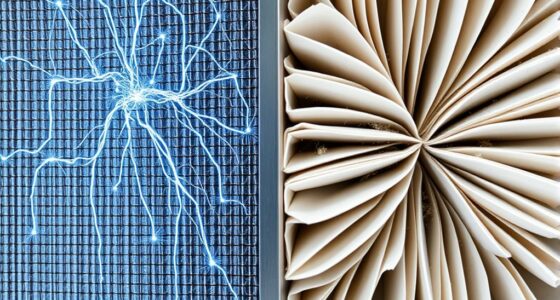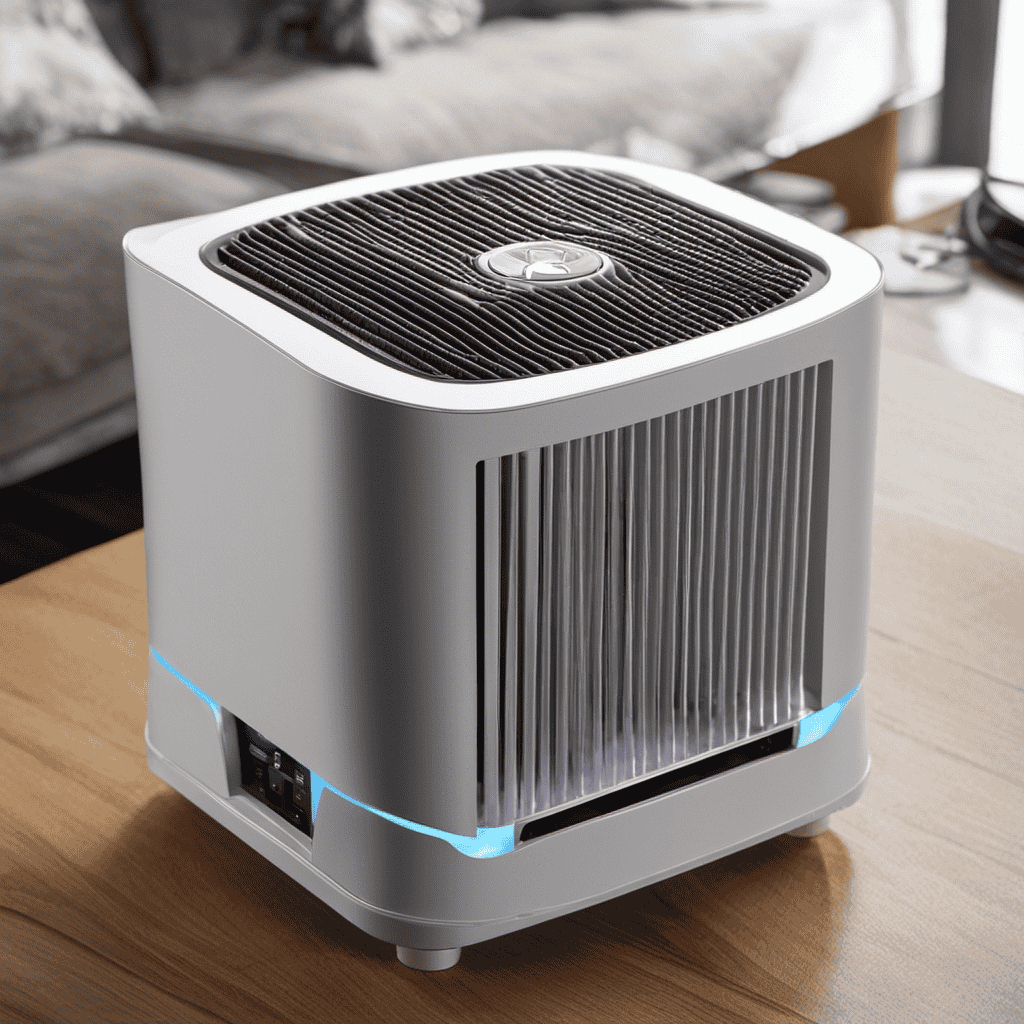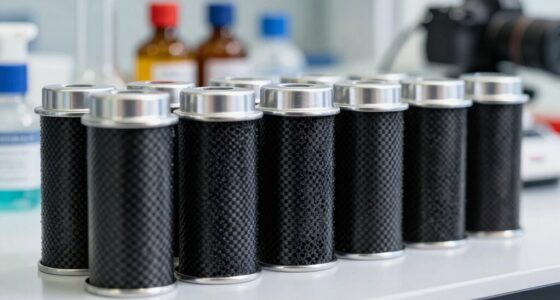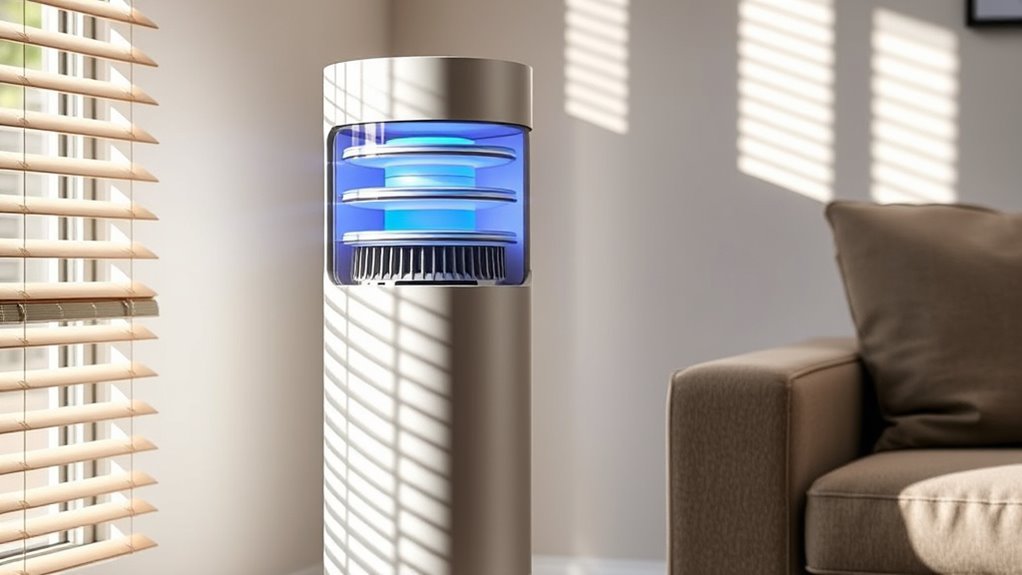

Hybrid air purifiers combine HEPA filters, activated carbon, and UV light to give you thorough indoor air cleaning. HEPA captures dust and allergens, while activated carbon reduces odors and chemicals. UV light kills bacteria and viruses, making the air healthier. Regular maintenance guarantees these advanced features work properly. Keep the device’s filters clean and replace as needed, and you’ll enjoy fresher, safer air every day. Discover further tips to optimize your purifier’s performance.
Key Takeaways
- Hybrid air purifiers combine HEPA filters, activated carbon, and UV light for comprehensive removal of dust, odors, bacteria, and viruses.
- These devices offer a multifaceted approach, enhancing indoor air quality by targeting a wide range of pollutants simultaneously.
- Regular maintenance, including filter replacement and UV bulb checks, is essential for optimal performance of hybrid systems.
- Proper placement and consistent use ensure maximum efficiency and continuous delivery of cleaner indoor air.
- Combining multiple technologies in one device provides a thorough, healthier indoor environment, ideal for sensitive individuals or polluted areas.
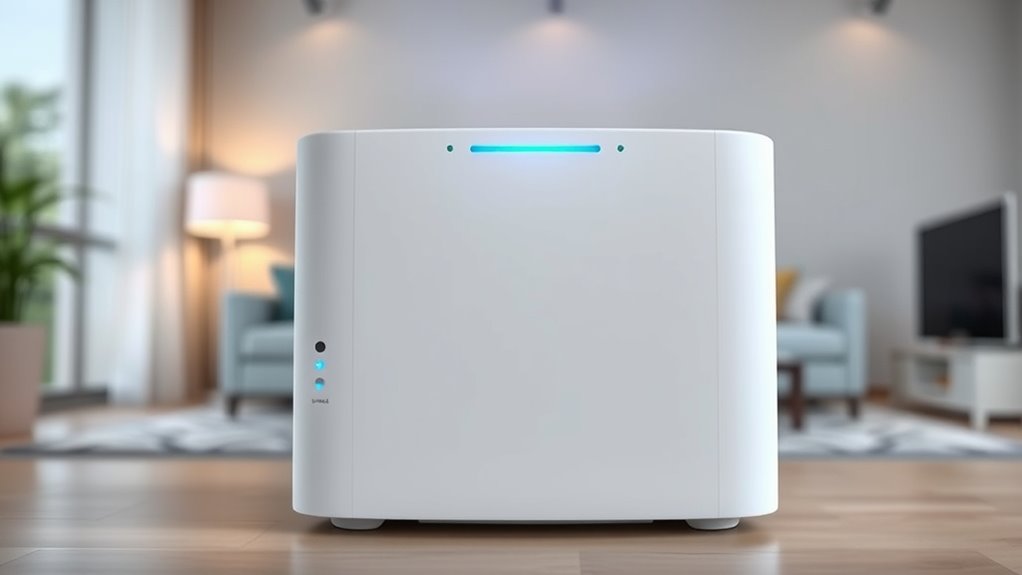
Hybrid air purifiers combine the strengths of multiple filtration technologies to provide cleaner, healthier indoor air. By integrating HEPA filters, activated carbon, and UV light, these devices address a wide range of air pollutants, guaranteeing your environment stays fresh and safe. When you choose a hybrid model, you’re investing in a thorough solution that markedly improves air quality by targeting dust, allergens, odors, bacteria, and viruses all at once. This multifaceted approach is especially beneficial if you live in an area with high pollution levels or if you have allergies or respiratory sensitivities.
Maintaining a hybrid air purifier is straightforward but indispensable for peak performance. Regular device maintenance helps guarantee the filters function properly and that the air remains as clean as possible. HEPA filters, for example, need to be replaced or cleaned according to the manufacturer’s instructions, often every six to twelve months, depending on usage and air quality. Activated carbon filters also require periodic replacement to prevent odor absorption capacity from diminishing. UV lamps, which kill bacteria and viruses, usually have a longer lifespan but should be checked regularly to confirm they’re working correctly. Many models feature indicator lights that notify you when filters need changing or UV bulbs need replacing, making upkeep more manageable.
Regular maintenance ensures your hybrid air purifier functions effectively and keeps indoor air clean.
Understanding how to maintain your device is vital, as neglecting it can reduce its efficiency and compromise air quality. Dust and debris can accumulate on filters, causing the device to work harder and consume more energy. Regularly inspecting and cleaning components like pre-filters can extend the life of your main filters and improve airflow. When replacing filters, always follow the manufacturer’s guidelines to avoid using incompatible products that could damage the device or reduce its effectiveness. Proper maintenance not only prolongs the lifespan of your hybrid air purifier but also guarantees that it continues to provide the maximum benefit for your indoor air quality. Additionally, filter replacement guidelines should be followed closely to ensure optimal operation and longevity of your device.
Furthermore, keeping the area around your purifier clean and ensuring unobstructed airflow is indispensable. Cluttered spaces can hinder the device’s performance, making it less effective at filtering pollutants. Using the device consistently and in the spaces where you spend the most time guarantees you get the best results. Remember, a well-maintained hybrid air purifier can markedly reduce airborne contaminants, creating a healthier indoor environment for you and your family. By staying attentive to device maintenance, you’ll guarantee your investment continues to deliver cleaner, fresher air day after day.

GermGuardian HEPA Air Purifier – Large Room Air Purifier for Bedroom, Office, Dorm, and Home – Filters Pet Dander, Dust, Pollen, Smoke, Scents – AC4825E – 22" Tower – Gray
- Room Coverage: Cleans small to large rooms efficiently
- Carbon Filter: Reduces cooking and pet odors
- HEPA Filtration: Captures 99.97% of allergens
As an affiliate, we earn on qualifying purchases.
As an affiliate, we earn on qualifying purchases.
Frequently Asked Questions
How Do Hybrid Purifiers Compare in Energy Efficiency to Single-Filter Models?
Hybrid purifiers generally use more energy than single-filter models because they operate multiple technologies simultaneously, increasing energy consumption. However, they often offer better overall air quality, which can improve cost efficiency by reducing health-related expenses and the need for multiple devices. While they may cost more upfront, their combined filtering power makes them more effective and potentially more economical over time, especially in larger spaces.
Can Hybrid Air Purifiers Eliminate Odors More Effectively Than Traditional Units?
Ever wondered if a hybrid air purifier can truly beat traditional units at odor elimination? Yes, it can. By combining HEPA, carbon, and UV technologies, hybrid purifiers target a wider range of pollutants and odors, making air purification more efficient. Their carbon filters absorb smells, while UV light neutralizes bacteria and viruses. This synergy boosts overall air purification efficiency, leaving your space fresher and odor-free more effectively than standard models.
Are There Specific Room Sizes That Hybrid Purifiers Are Best Suited For?
You should choose a hybrid air purifier based on your room size and purifier capacity. For small rooms, a compact unit with lower capacity works well, efficiently filtering air without overkill. In larger spaces, opt for a high-capacity purifier designed to handle bigger air volumes. Matching the purifier’s capacity to your room size ensures maximum odor removal, air purification, and overall air quality, making your environment healthier and more comfortable.
How Often Should the Filters and UV Bulbs Be Replaced in Hybrid Units?
Think of your hybrid air purifier as a trusted garden that needs tending. You should follow the maintenance schedule, replacing filters every 6 to 12 months and UV bulbs every 12 months. Regular replacement frequency guarantees peak performance, keeping your air clean and safe. Don’t wait until performance drops—consistent upkeep is the key to maintaining a healthier environment and prolonging your device’s lifespan.
Do Hybrid Air Purifiers Produce Any Ozone or Harmful Emissions?
Hybrid air purifiers generally do not produce significant ozone emissions or harmful chemicals if they’re designed properly. However, UV components can sometimes generate trace amounts of ozone, especially if the UV bulbs aren’t rated as ozone-free. To minimize risk, choose units with ozone emission certifications and verify proper maintenance. This way, you can enjoy cleaner air without exposing yourself to harmful chemicals or ozone.
Conclusion
Hybrid air purifiers work like a team of superheroes fighting off pollutants, odors, and germs all at once. By combining HEPA, carbon, and UV technologies, you get a powerful device that tackles every air quality challenge. It’s like having a multi-tool in your home, ready to improve your environment instantly. Investing in one means breathing easier and creating a healthier space—because clean air is the foundation of well-being.