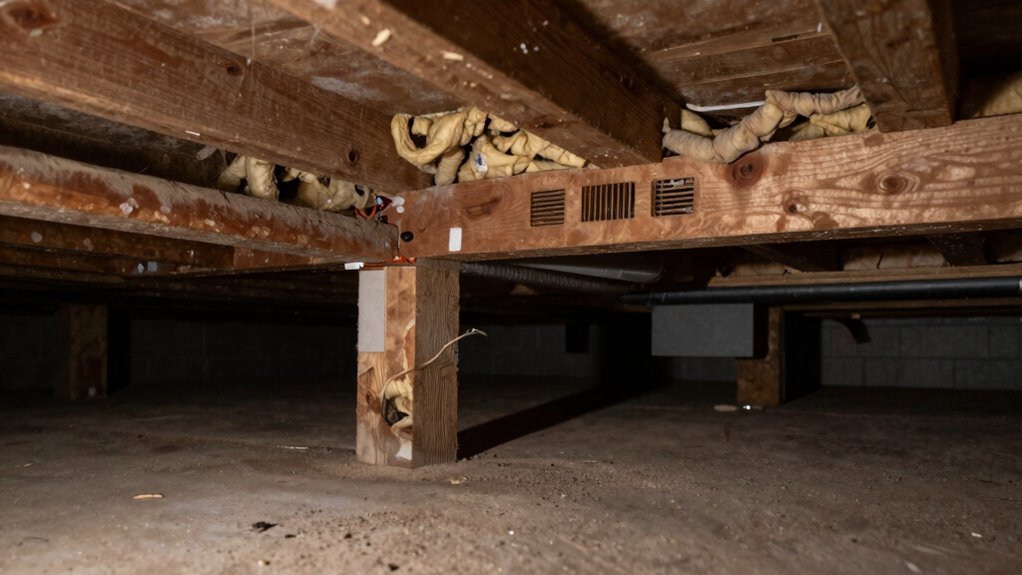
The key question is whether your crawlspace is properly sealed, ventilated, and moisture-controlled. Excess moisture, mold, or mildew in the crawlspace can seep into upstairs air, causing odors, humidity, and temperature issues. If you haven’t guaranteed good airflow, sealed gaps, and installed vapor barriers, your home’s air quality can decline. Keep in mind, addressing these factors is essential for comfort and health, and there’s more to explore if you want to solve the problem fully.
Key Takeaways
- Moisture in the crawlspace can lead to mold and musty odors that impact upstairs air quality.
- Proper sealing and insulation prevent dampness from seeping into living spaces.
- Adequate ventilation reduces humidity and stale air buildup in the crawlspace.
- Installing vapor barriers minimizes ground moisture rising into the crawlspace.
- Regular maintenance of vents, fans, and seals ensures ongoing moisture control and healthy upstairs air.

If you’re noticing strange odors or inconsistent temperatures upstairs, the problem might stem from your crawlspace. Many homeowners overlook this hidden area, but it plays an essential role in your home’s air quality and overall comfort. Moisture control is vital here because excess moisture creates a perfect environment for mold, mildew, and musty smells to develop. If your crawlspace isn’t properly sealed or dehumidified, it can lead to dampness that seeps into the living spaces above, affecting your indoor air quality. Addressing moisture issues is the first step toward improving upstairs air, and that begins with effective moisture control measures.
Strange odors and uneven temperatures upstairs often originate from moisture issues in your crawlspace.
You should contemplate implementing ventilation strategies that promote air circulation in your crawlspace. Proper ventilation helps reduce humidity levels by allowing stale, moist air to escape and fresh, dry air to circulate. This prevents the buildup of mold and mildew, which can release spores and foul odors into your home. There are a few strategies you can deploy, such as installing vents or fans that encourage airflow. For example, powered exhaust fans or gable vents can be effective if used correctly, but they need to be part of a well-planned ventilation system to avoid creating negative pressure that pulls in unconditioned or polluted air. Moisture control is a crucial aspect of maintaining a healthy indoor environment. Additionally, air quality can be significantly impacted by the presence of pollutants and spores originating from the crawlspace if proper measures are not taken. Ensuring proper ventilation not only helps manage humidity but also reduces the buildup of indoor pollutants that can impact health. Proper humidity levels are also essential for preventing the growth of mold and improving overall air quality.
Sealing off leaks and insulating your crawlspace can also improve moisture control and complement your ventilation efforts. Insulation helps maintain consistent temperatures, reducing the chances of condensation forming on cold surfaces. Proper insulation not only improves energy efficiency but also plays a key role in temperature regulation, which directly affects upstairs comfort. When combined with proper ventilation, this creates a balanced environment that minimizes excess moisture and prevents the temperature swings that often cause upstairs discomfort.
It’s also worthwhile to think about installing a vapor barrier, such as a plastic sheet covering the entire crawlspace floor. This barrier prevents ground moisture from rising into the space, which can noticeably reduce humidity levels. When moisture is controlled at its source, your ventilation strategies become more effective because you’re not fighting a constant influx of damp air. Regular maintenance and inspections are necessary to ensure these barriers and seals remain effective over time, especially in changing weather conditions.
Ultimately, keeping your crawlspace dry and well-ventilated isn’t a one-time fix—it’s an ongoing process. Regular inspections, maintaining vents and fans, and ensuring seals remain intact will help keep moisture levels in check. When you manage moisture control and employ smart ventilation strategies, you directly influence the quality of air in your upstairs rooms, making your home healthier, more comfortable, and free of those persistent odors or temperature inconsistencies.

Spirecover Crawl Space Vapor Barrier, 10 Mil 10×100' Black/White Panda Film
- Material: Heavy-duty virgin poly film
- Size: 10ft x 100ft covering 1000 sq ft
- Double-sided Design: Black and white surfaces for vapor blocking
As an affiliate, we earn on qualifying purchases.
As an affiliate, we earn on qualifying purchases.
Frequently Asked Questions
How Can I Tell if My Crawlspace Is Affecting Upstairs Air Quality?
You can tell if your crawlspace affects upstairs air by checking for musty odors, mold, or increased humidity upstairs. Inspect the crawlspace for poor insulation and excess moisture, which can release mold spores and odors into your home. Proper moisture control and crawlspace insulation help prevent airborne contaminants from traveling upstairs. If issues persist, consider professional testing to identify hidden mold or allergens impacting your indoor air quality.
What Are the Signs of Poor Airflow From the Crawlspace?
You might notice upstairs rooms feel stuffy or humid despite good ventilation—that’s a sign of poor airflow from your crawlspace. Ironically, ignoring moisture control or skipping insulation upgrades can trap excess moisture below, affecting upstairs air quality. Look out for musty odors, mold, or uneven temperatures, which all point to airflow issues. Addressing these with proper insulation and moisture management can restore fresh air and comfort upstairs.
Can Pest Infestations in the Crawlspace Impact Upstairs Air?
Yes, pest infestations in your crawlspace can impact upstairs air. Pest control is essential to prevent pests like rodents and insects from spreading allergens and bacteria upstairs. Crawlspace moisture encourages pest activity, worsening the problem. When pests invade, they produce droppings and allergens that circulate through your home’s ventilation, affecting air quality. Regular pest control and moisture management help keep your upstairs air clean and healthy.
How Often Should Crawlspaces Be Inspected for Airflow Issues?
You should inspect your crawlspace at least twice a year to catch airflow issues early. Regular checks help you spot moisture problems, mold, or insulation issues that could compromise airflow. Prioritize moisture control and consider insulation upgrades if needed. By maintaining a proactive inspection schedule, you prevent costly damage, improve indoor air quality, and guarantee your home stays safe, secure, and well-ventilated.
Are There Specific Ventilation Systems Recommended for Crawlspace Improvements?
For crawlspace improvements, you should consider installing ventilation systems that include quality ventilation materials like vents and fans designed for airflow. Using airflow sensors helps you monitor and guarantee proper ventilation, preventing moisture buildup. It’s recommended to use a combination of passive vents and powered exhaust fans, tailored to your crawlspace’s size and conditions, to optimize airflow and maintain a healthy environment that benefits upstairs air quality.
Conclusion
So, savvy homeowner, remember: sealing your crawlspace can substantially streamline your space, soothing upstairs air and sidestepping sneaky issues. Don’t delay or doubt—delve into diligent details to deter drafts and dampness. Your diligent efforts deliver better breatheability below and blissful breezes upstairs. Take charge now, and guarantee your entire home’s comfort, cleanliness, and coziness, all starting with a simple, strategic seal. Secure your space, and enjoy serene, satisfying air everywhere!