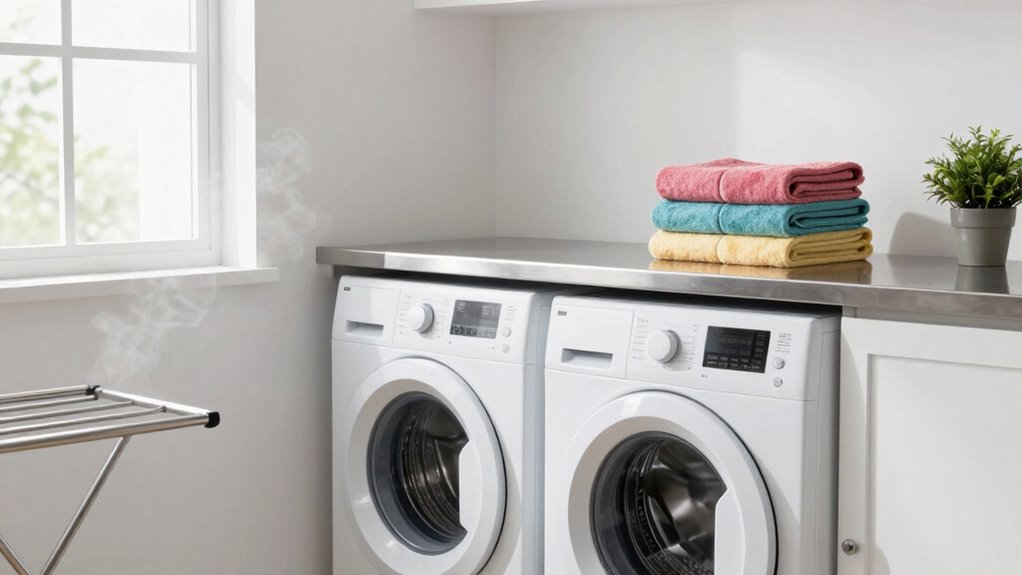

Laundry rooms may seem quiet and clean but can secretly harm your air quality. Fumes from detergents, fabric softeners, and chemicals release VOCs that can irritate your lungs and cause allergies over time. Poor ventilation worsens the problem by trapping pollutants inside. By upgrading airflow, choosing chemical-free products, and managing fumes carefully, you can make your laundry space healthier. Keep exploring to discover more simple ways to improve your indoor air safety.

Get garden gear delivered free with Prime
- Fast, free delivery on millions of items
- Prime Video, Amazon Music and more included
- Member-only deals all year
Key Takeaways
- Laundry rooms often contain fumes from detergents, fabric softeners, and cleaning chemicals that can degrade indoor air quality.
- Poor ventilation in laundry areas allows airborne pollutants and VOCs to accumulate, impacting health over time.
- Using chemical-free products and increasing airflow helps reduce harmful chemical emissions in laundry spaces.
- Regular maintenance of dryers and lint filters prevents dust and particle buildup that can release pollutants.
- Installing air purifiers and monitoring air quality can effectively mitigate and identify indoor pollution sources.

Many laundry rooms silently compromise your indoor air quality, often overlooked as a source of indoor pollution. You might not realize that the air in this space can be filled with airborne particles, fumes, and chemicals that impact your health over time. The good news is that simple changes can make a big difference. Improving ventilation is one of the most effective steps you can take. By installing or upgrading exhaust fans, ensuring proper airflow, and opening windows when possible, you help disperse the airborne pollutants generated during laundry routines. Proper ventilation reduces the concentration of fumes from detergents, fabric softeners, and dry cleaning chemicals, creating a healthier environment for you and your family.
Another key step is switching to chemical free detergents. Conventional laundry products often contain harsh chemicals, fragrances, and dyes that can linger in the air and settle on fabrics, releasing volatile organic compounds (VOCs). These VOCs can cause respiratory irritation, allergic reactions, or other health issues, especially if you spend a lot of time in the laundry room. By choosing natural, chemical free detergents, you eliminate many of these problematic substances from your laundry routine. These eco-friendly options typically use plant-based ingredients, which not only improve air quality but also reduce your exposure to unnecessary chemicals.
Beyond switching detergents and improving ventilation, be mindful of how you handle laundry. Using a well-ventilated space and avoiding overfilling the washer or dryer can prevent the buildup of fumes. Regularly cleaning lint filters and dryer vents helps maintain good airflow and prevents the accumulation of dust and particles that can be released into the air. Additionally, consider placing air purifiers with HEPA filters in your laundry area. These devices can trap airborne pollutants, further enhancing indoor air quality.
You also want to pay attention to the materials and products stored in your laundry room. Keep chemical-based cleaning supplies, aerosols, and air fresheners out of this space or tightly sealed if necessary. Opt for natural alternatives or homemade solutions when possible. This minimizes the release of harmful chemicals into the air, making your laundry room a safer environment. Incorporating proper storage practices can help maintain a healthier indoor air quality by limiting chemical exposure. Incorporating air quality improvement devices can further contribute to a safer laundry environment. Additionally, selecting air purification devices equipped with HEPA filters can help reduce particulate matter and VOCs in the room. Regularly monitoring the indoor air quality in your laundry space can help identify sources of pollution and guide effective mitigation strategies.
air purifier with HEPA filter for laundry room
As an affiliate, we earn on qualifying purchases.
As an affiliate, we earn on qualifying purchases.
Frequently Asked Questions
How Can I Improve Ventilation in My Laundry Room?
To improve ventilation in your laundry room, consider upgrading your ventilation system with better exhaust fans or adding a vent if you lack one. You can also incorporate air purifier options to reduce moisture and airborne pollutants. Keep doors open when possible, and regularly clean vents and filters. These steps help guarantee fresh air circulation, minimize humidity, and improve overall air quality in your laundry space.
Are Certain Detergents Better for Indoor Air Quality?
Choosing eco-friendly detergents and fragrance-free options can considerably improve your indoor air quality. These gentle choices reduce airborne chemicals and lessen odors, making your laundry room healthier. Eco-friendly detergents often contain fewer harsh ingredients, while fragrance-free varieties avoid synthetic scents that can irritate your respiratory system. By switching to these, you’ll create a more peaceful, fresh environment, minimizing potential air quality issues and promoting comfort every time you do laundry.
What Are Common Allergens Found in Laundry Rooms?
You’ll likely find dust mites and pet dander as common allergens in laundry rooms. Dust mites thrive in humid environments and feed on fibers, while pet dander can cling to clothes, linens, and towels. These allergens can trigger allergies or asthma symptoms when disturbed during laundry. To reduce exposure, use allergen-proof covers, wash items regularly in hot water, and keep the laundry area well-ventilated.
How Often Should I Clean My Dryer Vent?
You should clean your dryer vent at least once a year—irony alert, since neglecting it could turn your laundry room into a fire hazard! Good ventilation tips include checking for lint buildup regularly and ensuring proper airflow. Frequent dryer maintenance prevents overheating and improves efficiency. Don’t wait until you notice longer drying times; stay ahead with routine vent cleaning, keeping your laundry space safe and fresh.
Can Mold Spores Affect Laundry Room Air Quality?
Yes, mold spores can affect your laundry room air quality. Mold growth releases airborne spores that can trigger allergies or respiratory issues. If you notice dampness, mold, or a musty smell, it’s essential to address the problem quickly. Proper ventilation, fixing leaks, and cleaning moldy surfaces help reduce airborne spores, improving the air you breathe. Regularly inspecting your laundry area keeps mold growth in check and maintains healthier indoor air quality.
Conclusion
Remember, your laundry room is like a hidden garden—it may seem quiet and harmless, but unseen dangers can lurk there. By ensuring proper ventilation and using eco-friendly detergents, you can clear the air and keep your space safe. Don’t let your laundry room become a silent trouble spot; nurture it with care, and it will reward you with fresh, clean air. A healthy home starts in the quiet corners you might overlook.
Halloween Picks
halloween
As an affiliate, we earn on qualifying purchases.