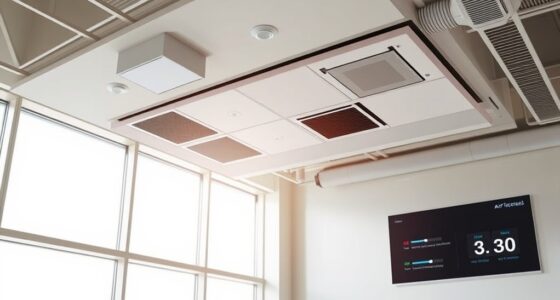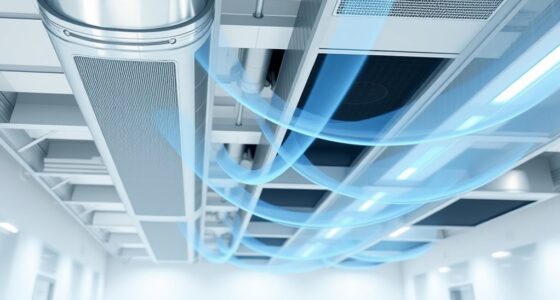

When upgrading to a MERV 13 filter, the biggest mistake is neglecting airflow resistance. These filters are denser, which can slow down air from moving freely through your system, causing strain or reduced efficiency. If your HVAC struggles or runs longer, airflow may be hindered. To avoid this, you need to manage airflow properly and ensure your system can handle the higher MERV rating. Keep going to find out how to prevent this common issue.
Key Takeaways
- Installing a MERV 13 filter without adjusting fan settings can restrict airflow and strain the HVAC system.
- Failing to monitor system performance after upgrading may overlook signs of reduced airflow or increased energy use.
- Using a filter rated too high for your system’s design can cause excessive resistance and hinder airflow.
- Neglecting regular filter maintenance and replacement can lead to clogging, choking airflow over time.
- Not consulting HVAC professionals before upgrading can result in improper filter selection and airflow issues.

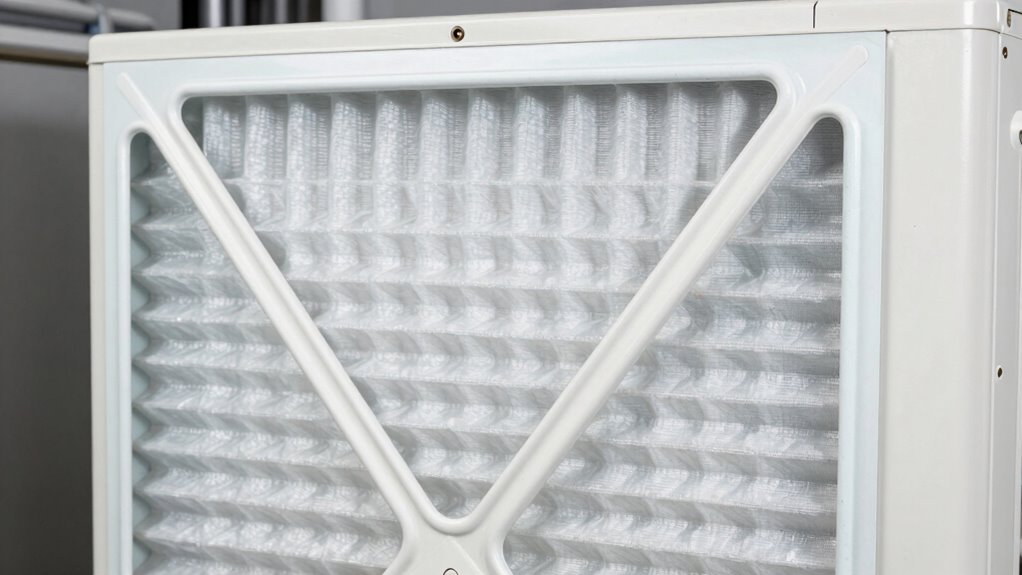
Upgrading your HVAC system to MERV 13 filters can markedly improve indoor air quality by capturing finer particles like pollen, pet dander, and bacteria. However, this upgrade isn’t without its challenges, especially if you overlook proper air filter maintenance. When you choose higher-rated filters, you need to be proactive about regularly inspecting and replacing them. Otherwise, dirt and debris can accumulate quickly, causing the filter to become clogged. A clogged filter restricts airflow, forcing your system to work harder to circulate air, which can lead to increased energy consumption and wear on your HVAC components. To prevent this, you should follow a strict schedule for changing your filters—usually every 1 to 3 months, depending on usage and household conditions.
Beyond maintaining your filters, integrating energy efficiency tips is vital when upgrading to MERV 13. These filters, while excellent at trapping contaminants, tend to have higher resistance to airflow compared to lower-rated filters. This means your HVAC system must exert more effort to push air through the dense filter material, potentially increasing energy bills. To counteract this, consider adjusting your system’s fan settings or scheduling regular maintenance checks to ensure your system is operating at its best. Sealing leaks in ductwork and insulating your HVAC system can also help improve overall efficiency, ensuring you’re not wasting energy battling airflow restrictions. Proper airflow management is essential for maintaining system performance after a filter upgrade.
You might be tempted to simply swap in a higher-rated filter and forget about it, but that’s a mistake that can choke airflow and diminish your system’s performance. It’s essential to understand how MERV 13 filters affect your system’s airflow and to monitor how your system responds after the upgrade. If you notice reduced airflow or your system runs longer than usual, it’s time to revisit your air filter maintenance routine or consult an HVAC professional. Additionally, keep an eye on your energy bills—any unexpected spike could indicate your system is working overtime due to airflow resistance.
Frequently Asked Questions
Will MERV 13 Filters Increase Energy Bills Significantly?
Yes, MERV 13 filters can increase your energy bills because they may cause your HVAC system to work harder, raising energy consumption. However, if you choose a high-quality filter with a longer lifespan and guarantee your system is well-maintained, the impact on energy costs can be minimized. Proper airflow and regular filter changes help your system run efficiently, balancing improved air quality with manageable energy expenses.
How Often Should MERV 13 Filters Be Replaced?
Think of your MERV 13 filter as a essential gatekeeper, and its lifespan is like the ticking clock of a busy city. You should replace it every 6 to 12 months, depending on usage and air quality. Keep an eye on the filter’s condition, and don’t wait until it’s clogged. Regular replacement guarantees ideal airflow, energy efficiency, and cleaner air, preventing your HVAC system from working overtime.
Can MERV 13 Filters Cause System Overheating?
Yes, MERV 13 filters can cause system overheating if airflow restrictions occur due to poor filter compatibility or a clogged filter. When you install a filter that’s too dense or isn’t compatible with your system, it can block airflow, making your HVAC work harder and increasing the risk of overheating. To prevent this, make certain you select the right filter type and replace it regularly to maintain proper airflow.
Are MERV 13 Filters Suitable for All HVAC Systems?
Hold onto your hat, because MERV 13 filters aren’t one-size-fits-all. They can cause airflow restriction if your HVAC system isn’t designed for high-efficiency filters. To avoid problems, check filter compatibility with your system’s specifications. While they offer excellent filtration, they might strain older or less robust units. Always consult your HVAC manufacturer or a professional to guarantee your system can handle a MERV 13 filter safely.
What Maintenance Is Required After Upgrading to MERV 13?
After upgrading to a MERV 13 filter, you need to check filter compatibility with your system to guarantee proper fit and performance. Regularly replace or clean the filter, typically every 1-3 months, to maintain system airflow. Keep an eye on your system’s operation—if airflow decreases or your system strains, it may be time for a maintenance check or filter adjustment. Proper upkeep helps your HVAC run efficiently and effectively.
Conclusion
Think of upgrading to MERV 13 filters like adding a powerful engine to your car. If you ignore the airflow, it’s like installing a turbocharger with a blocked exhaust—your system chokes and stalls. To keep everything running smoothly, make sure your ducts aren’t constricted. When you balance filtration with airflow, your HVAC system breathes easy and performs at its best, just like a well-tuned engine cruising effortlessly down the road.