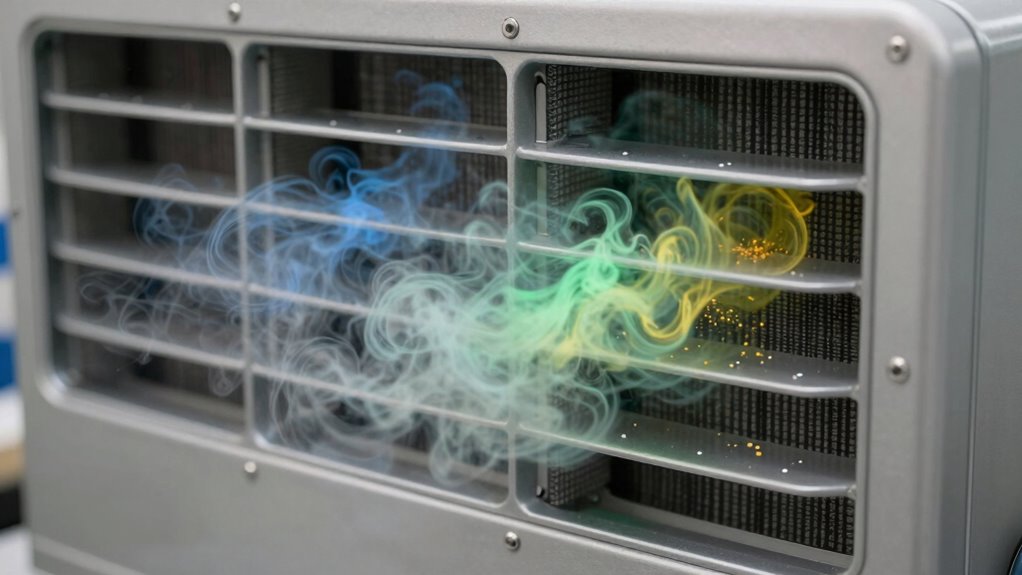

VOCs and odors differ in composition; VOCs are invisible chemical vapors emitted from sources like paints or cleaners, while odors come from particles or molecules with distinct smells. Many filters target VOCs using activated carbon or advanced tech, but some odors slip through because they come from tiny particles or continuous emissions that are harder to capture. If you want to know which methods improve filtration and stop these sneaky smells, keep exploring this topic further.
Listen free for 30 days with Audible
Thousands of audiobooks and originals — cancel anytime.
As an affiliate, we earn on qualifying purchases.
Key Takeaways
- Some odors are caused by particles too small for standard filters to capture effectively.
- Certain VOCs are continuously emitted, making complete removal difficult with typical filtration methods.
- Not all filters are designed to target both chemical vapors and particulate odors simultaneously.
- Odors from non-volatile particles or complex compounds may linger despite air purification.
- Advanced filtration technologies or multiple filters are often needed to fully eliminate persistent smells.
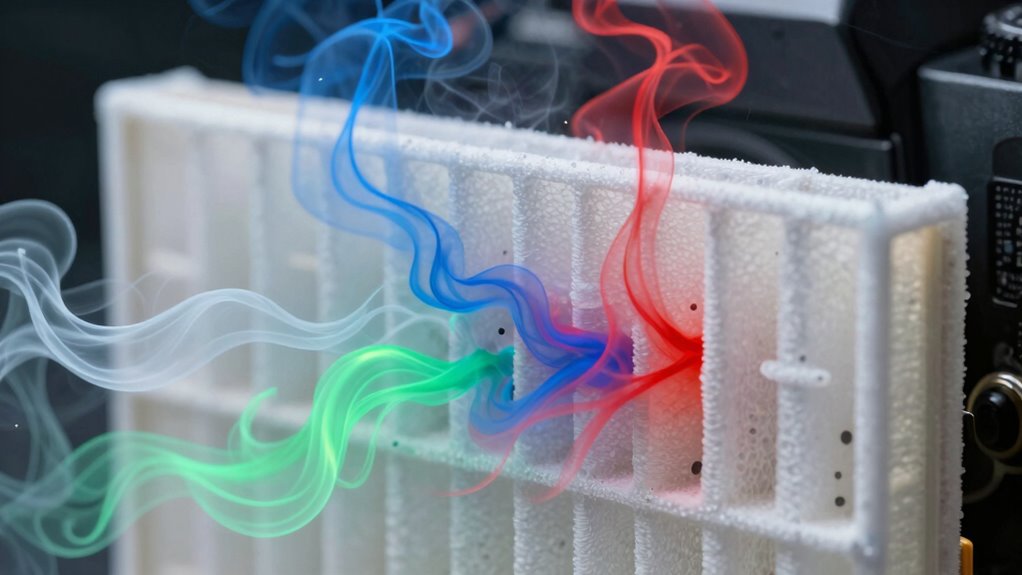
Have you ever wondered what the difference is between VOCs and odors? It’s a common question because both can affect your indoor air quality, but they aren’t the same thing. Understanding this difference helps you choose the right air purification methods to keep your home fresh and healthy. VOCs, or volatile organic compounds, are chemical substances emitted as gases from certain solids or liquids. You might not see or smell them directly, but they can linger invisibly in the air. Many household products, like paints, cleaning supplies, and furniture, release VOCs. These chemical vapors can cause health issues over time, especially with prolonged exposure. Air purification systems aimed at VOC removal often use activated carbon filters or advanced filtration technologies that trap these chemical molecules, reducing their presence in your indoor environment.
Odors, on the other hand, are usually caused by specific particles or molecules that have a distinct smell. Think of the aroma of freshly baked bread, the scent of flowers, or the pungent smell of smoke—these are odors. They originate from particles or compounds that interact with your olfactory senses. Odor absorption is key here; air purifiers designed for odor removal often incorporate activated carbon or specialized filters that adsorb odor molecules, preventing them from reaching your nose. Unlike VOCs, odors tend to be more perceptible and often linger because they are directly linked to specific particles or substances in your home environment. This is why, even after cleaning or airing out a space, certain smells can persist—because the particles causing them are still present and waiting to be absorbed or neutralized. Additionally, some odors are caused by volatile organic compounds, which can be tricky to eliminate completely due to their continuous emission or high concentrations.
While air purification devices can be effective at reducing both VOCs and odors, they don’t always remove everything completely. Some odors are caused by microscopic particles that require different filtering techniques, and certain VOCs are more challenging to eliminate because they are emitted continuously or are present in high concentrations. This is why some air purifiers combine multiple technologies—like HEPA filters for particles and activated carbon for chemicals—to tackle both issues simultaneously. It’s also important to recognize that not all filters are created equal; choosing one that specifically targets the pollutants you’re most concerned about will give you the best results.
As an affiliate, we earn on qualifying purchases.
Frequently Asked Questions
Can VOCS Cause Long-Term Health Issues?
Yes, VOCs can cause long-term health issues. When you’re exposed to indoor pollution from chemicals, it increases your risk of chronic health problems like respiratory issues, allergies, and even more serious conditions. Continuous chemical exposure from VOCs can accumulate in your body, leading to long-term health effects. To protect yourself, make certain of good ventilation and use air purifiers that target VOCs to reduce indoor pollution.
How Do Air Purifiers Specifically Target Odors?
Air purifiers target odors by using activated carbon filters that absorb and trap odor molecules through a process called odor absorption. When you run the purifier, the activated carbon attracts and binds with smell particles, effectively neutralizing unpleasant smells. This method is especially effective for persistent odors like cooking, smoke, or pets, ensuring your indoor air feels fresher and cleaner. Remember, a good activated carbon filter makes all the difference.
Are Natural Remedies Effective Against VOCS?
Coincidence often brings natural remedies into the spotlight, but they aren’t always effective against VOCs. While some people trust natural remedies like activated charcoal, essential oils, or vinegar, these options usually fall short compared to chemical solutions designed specifically for VOC removal. You might find them helpful for odors, but for VOCs, it’s smarter to rely on proven chemical solutions that target these harmful compounds directly.
Do All VOCS Have the Same Smell?
Not all VOCs have the same smell because of their chemical diversity. Some VOCs emit strong, recognizable odors, while others are almost scentless. Your ability to detect these smells depends on your scent detection abilities and the specific VOC’s properties. Certain VOCs may slip through filters because their smell isn’t noticeable or they’re present at low concentrations, making it harder for your nose to pick up their scent.
How Quickly Do Filters Remove Persistent Odors?
Think of filters as a race car on a track, rushing to clear odors. They typically take minutes to hours, depending on odor absorption rate and filter lifespan. Persistent smells linger longer if the filter’s clogged or nearing the end of its life. To accelerate odor removal, replace filters regularly and choose high-quality options. This way, you guarantee your space stays fresh and odors don’t outrun your efforts.
Conclusion
So, next time you’re puzzled by a lingering smell that your filter misses, remember VOCs and odors aren’t always the same. For example, a homeowner noticed a persistent chemical smell after installing a new carpet, even though filters seemed fine. It turned out VOCs from the adhesives were slipping through, while the odor was masked. This shows that understanding the difference helps you choose the right filters, ensuring your home stays fresh and odor-free.
NFL season / tailgating Picks
team gear
As an affiliate, we earn on qualifying purchases.