TL;DR

Get garden gear delivered free with Prime
- Fast, free delivery on millions of items
- Prime Video, Amazon Music and more included
- Member-only deals all year
Vermiculite is a lightweight, heat-expanded mineral used in growing mixes to hold moisture and some dissolved nutrients. It can help with seed starting and mixes that dry quickly, but it is not a universal soil amendment or a substitute for fertilizer, drainage or good watering practices.
Grow Organic’s guide to vermiculite explains how the heat-expanded mineral can help retain moisture in seed-starting and potting mixes, while warning that it may be a poor fit for containers that already stay wet. The advice matters to gardeners choosing amendments because adding a water-holding ingredient without considering the plant, mix and drainage can leave roots in persistently damp conditions.
Vermiculite is a naturally occurring mineral that expands into lightweight flakes when heated. According to the guide, those particles hold water and some dissolved nutrients. Horticultural products come in different particle sizes, which can affect how they perform in a growing mix. The guide also distinguishes vermiculite from perlite: vermiculite is not volcanic glass, and its pH can vary by source.
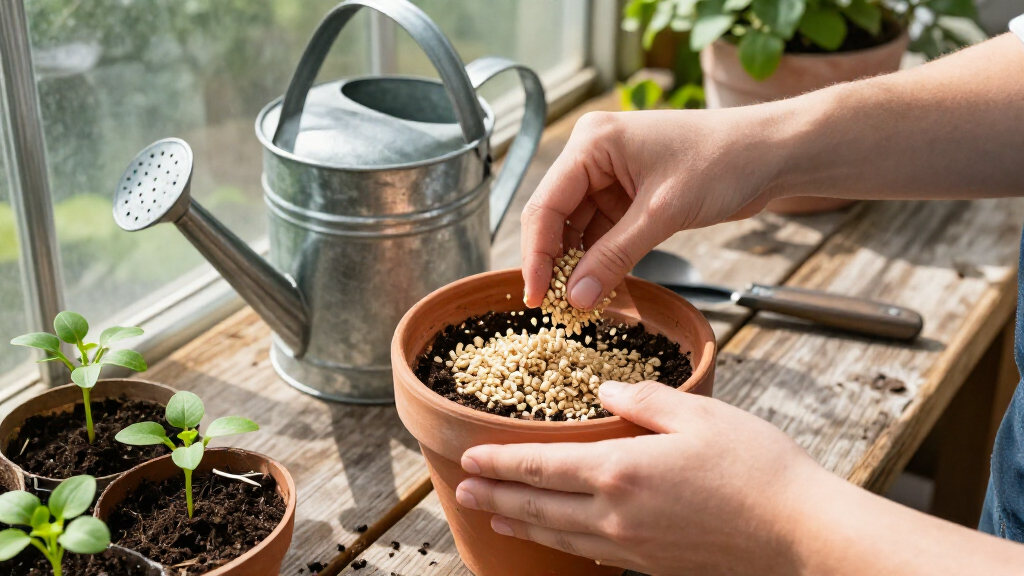
The material’s main use is moisture retention. It can be included in seed-starting and propagation mixes, and may suit plants or potting blends that dry too quickly. Fine grades can be used to cover some seeds lightly, but the guide says to follow seed-packet directions; seeds that need light should not be covered in a way that blocks it. Seed-starting mixes should be kept moist, not saturated.
Vermiculite can hold some nutrients, but it is not a complete fertilizer and pure vermiculite does not supply everything seedlings need as they grow. Its water-retaining quality also means it is not automatically the right choice for improving drainage. Grow Organic says perlite is generally better suited when the aim is greater aeration and faster drainage. Pumice is described as heavier and more durable, while coir is an organic fiber that can also hold water.
Choosing Amendments for Root Conditions
The practical consequence is that an amendment should match the problem in the growing medium. A mix that dries too fast may benefit from vermiculite, while one that remains wet may need better drainage or changes to watering rather than another ingredient that holds water. More vermiculite is not always better, particularly in containers where excess moisture is already limiting root growth.
The guide also cautions against treating a single recipe as universal. The amount to use depends on the existing ingredients, the plant, container size and watering routine. Gardeners can check whether a commercial potting mix already contains vermiculite, then test a small batch before changing multiple containers. Drainage holes remain necessary, and adding vermiculite does not correct compacted subsoil, poor site drainage or lawn compaction.
As an affiliate, we earn on qualifying purchases.
How Vermiculite Compares With Alternatives
Vermiculite is one of several materials used to balance air, water, root support and nutrient management in growing media. Grow Organic’s comparison describes perlite as a lightweight option for aeration and drainage, while vermiculite is used when more water retention is wanted. Pumice offers more durable structure and root anchorage, according to the guide, and coir can contribute moisture retention in organic mixes. Properties can vary by grade and source.
There is no single proportion recommended for every potting mix. As one example, the guide cites a University of Missouri Extension houseplant blend of three parts sphagnum peat, one part vermiculite and one part perlite. Vermiculite accounts for 20% of that recipe by volume; the source does not present that figure as a general rule for adding it to other mixes.
For beds, the guide says vermiculite may help sandy soil retain moisture, but large applications can be costly. It does not repair compacted subsoil or solve poor drainage. In clay soil or raised beds that stay wet, gardeners should address drainage and watering first. The guide also recommends seeking local turf advice before applying it across a large lawn.
What the Guide Does Not Specify
The supplied report does not give a publication date, identify a universal application rate, or provide product-specific test results. It does not establish that every vermiculite product has the same particle size, pH or performance; the guide says these characteristics vary. Its cited houseplant blend is one example, not evidence that the same proportion suits every plant or commercial mix.
Whether a particular container needs more moisture retention depends on its current ingredients, drainage, plant requirements and watering conditions. The report does not assess individual products or diagnose specific garden-bed and lawn problems. Gardeners with persistently wet soil may need site-specific advice rather than an amendment recommendation alone.
Test a Small Mix Before Scaling
Before adding vermiculite, check the potting-mix label and the product’s intended use. The guide advises preparing a small batch, moistening it evenly and observing how quickly it dries before adjusting more containers. Mix ingredients evenly without packing them tightly, and keep drainage holes clear.
When handling dusty material, Grow Organic advises dampening it, working with ventilation and avoiding breathing the dust. Gardeners should monitor the mix over time as ingredients settle and roots fill the container. If it remains wet, adding another water-holding ingredient is unlikely to address the underlying problem; watering and drainage should be reviewed.
Key Questions
What is vermiculite used for in gardening?
It is used to retain moisture in some seed-starting, propagation and potting mixes. It is a growing-medium ingredient, not a complete growing system or fertilizer.
Does vermiculite improve drainage?
Not necessarily. Vermiculite holds water, so it may not suit a mix that already stays wet. The guide says perlite is generally better when the main goal is more aeration and faster drainage.
How much vermiculite should I add to potting soil?
There is no universal percentage. Check whether the mix already includes it, consider the plant and container, and test a small batch. The cited University of Missouri Extension recipe is one example, not a general formula.
Can I use vermiculite for seeds?
Yes, it can be used in seed-starting mixes, and fine grades may lightly cover some seeds. Follow the seed packet: seeds that need light should not receive a covering that blocks it. Keep the mix moist rather than saturated.
Will vermiculite fix wet garden soil or compacted ground?
No. The guide says it does not repair compacted subsoil or poor site drainage. Address drainage and watering first, and seek local advice for large lawn or site problems.
Source: rss
Fall yard work Picks
leaf blowers
As an affiliate, we earn on qualifying purchases.