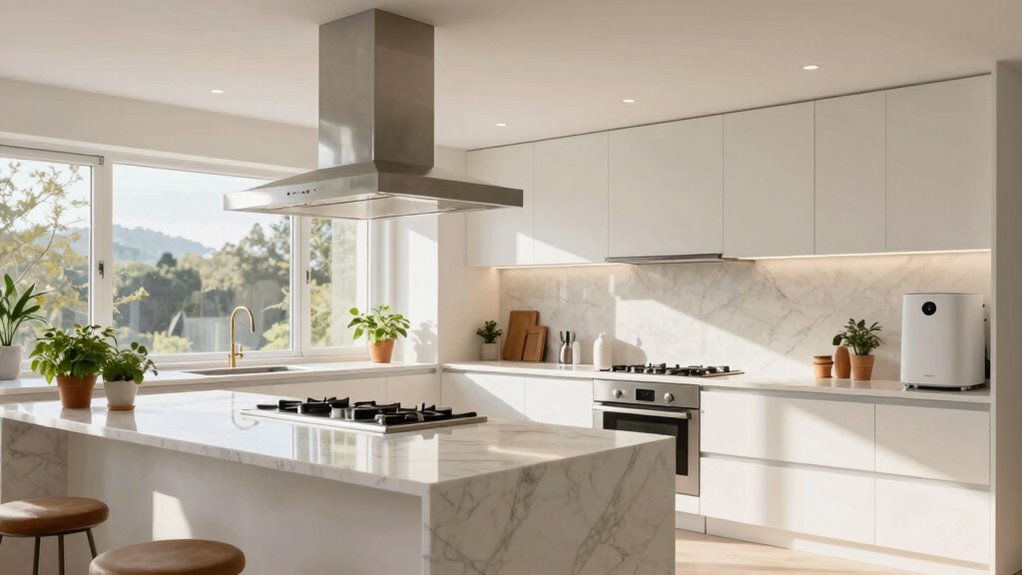

To keep your open-layout kitchen fresh and clean, use a combination of ventilation methods. Install a powerful under-cabinet range hood and ceiling fans to exhaust smoke, odors, and humidity outside. Open windows and doors to create cross-ventilation, especially after cooking. Keep fans and filters clean to maintain efficiency. Reducing pollution sources like steam and smoke, along with natural airflow, helps improve overall air quality. If you stay tuned, you’ll discover even more tips for best kitchen ventilation.

Get garden gear delivered free with Prime
- Fast, free delivery on millions of items
- Prime Video, Amazon Music and more included
- Member-only deals all year
Key Takeaways
- Use a combination of under-cabinet range hoods and ceiling fans to effectively remove cooking fumes and odors.
- Enhance natural ventilation by opening windows across from each other to create cross-ventilation.
- Maintain proper airflow patterns and regularly clean filters and surfaces to ensure optimal pollutant removal.
- Minimize indoor pollution sources by using lids on pots, low-emission appliances, and avoiding excessive candles.
- Regularly combine natural and mechanical ventilation methods for a healthier, more comfortable open kitchen environment.
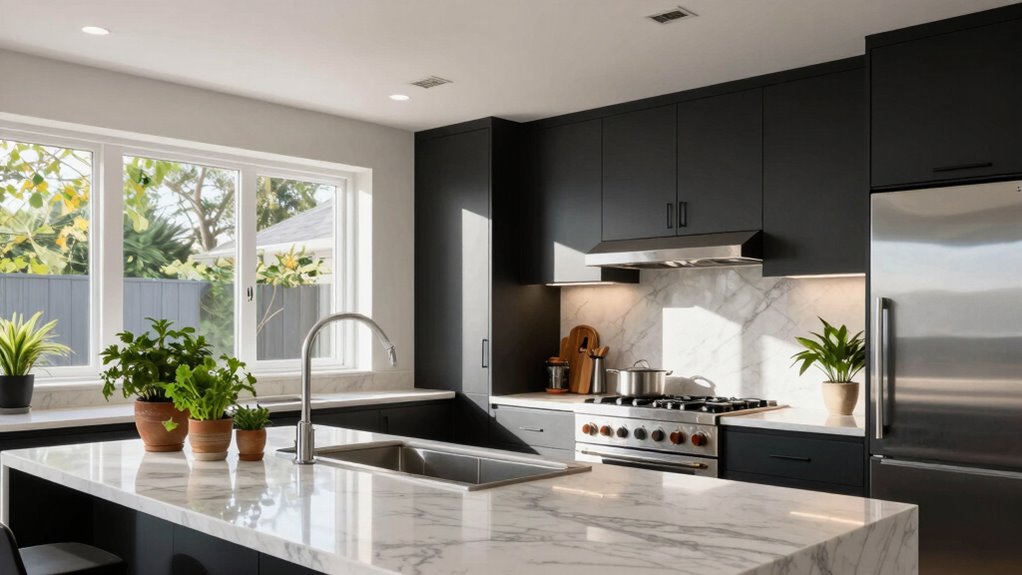
Have you ever wondered how the air quality in your kitchen affects your health and cooking experience? In open-layout homes, where your kitchen flows seamlessly into living spaces, maintaining good air quality is especially important. Without proper ventilation, cooking fumes, smoke, and odors can quickly spread throughout your home, making the environment uncomfortable and potentially unhealthy. To combat this, understanding and applying effective ventilation techniques is key to air quality improvement and guaranteeing a fresh, safe living space.
Start by considering your ventilation options. An under-cabinet range hood can be a game-changer, especially if it’s equipped with a powerful exhaust fan that vents outside. This direct removal of pollutants prevents them from dispersing into your open living areas. If a range hood isn’t feasible, installing a ceiling-mounted ventilation fan can help circulate air and extract odors at their source. In open layouts, positioning these fans strategically ensures they work efficiently, pulling air upward and out of the space. Remember, the goal is to create a continuous airflow that effectively removes airborne contaminants and keeps your kitchen and adjoining areas fresh.
In addition to mechanical ventilation, natural ventilation plays a crucial role. Opening windows and doors during and after cooking allows fresh air to enter while pushing stale, contaminated air out. Cross-ventilation, where air flows through the space from one side to the other, enhances this process. To maximize air quality improvement, consider creating a cross-breeze by opening windows across from each other, especially when you’re cooking or cleaning. Using ceiling fans in conjunction with natural airflow can also help circulate air effectively without relying solely on exhaust systems. Incorporating proper ventilation methods ensures that indoor air remains healthy and comfortable. Additionally, paying attention to airflow patterns can significantly influence how effectively pollutants are removed from your space. Ensuring proper air circulation can prevent the buildup of humidity and reduce the likelihood of mold growth, further improving indoor air quality. Being mindful of ventilation maintenance is also essential, as clogged filters or poorly functioning fans can diminish overall effectiveness.
Another tip is to minimize sources of indoor pollution. Use lids on pots to contain steam, avoid burning candles excessively, and choose low-emission appliances whenever possible. Regularly cleaning your kitchen surfaces and filters ensures your ventilation systems perform at their best. In open layouts, even small changes—like positioning your refrigerator away from cooking zones—can reduce heat and humidity buildup, further improving overall air quality.
Ultimately, maintaining an inviting and healthy open kitchen depends on implementing smart ventilation techniques and consistently working towards air quality improvement. By combining mechanical and natural methods, you’ll create a space where cooking is enjoyable and your home remains fresh. Remember, good airflow isn’t just about comfort — it’s about safeguarding your well-being, so take the time to optimize your ventilation setup for a healthier, more pleasant living environment.
under-cabinet range hood with external vent
As an affiliate, we earn on qualifying purchases.
As an affiliate, we earn on qualifying purchases.
Frequently Asked Questions
How Often Should I Replace Kitchen Air Filters?
You should replace your kitchen air filter every 1 to 3 months, depending on the air filter lifespan and your home’s air quality. If you notice increased dust, odors, or reduced airflow, it’s time for a replacement. Regularly checking and maintaining your filters guarantees peak air quality and appliance efficiency. Remember, the replacement frequency can vary based on usage, pets, and cooking habits, so stay attentive to your home’s needs.
Can Plants Improve Kitchen Air Quality?
Imagine a busy kitchen where indoor plants like pothos sit on the windowsill, actively improving air quality through air purification. Indoor plants can indeed enhance your kitchen’s air quality by removing toxins and increasing humidity, making the space healthier. They absorb pollutants like formaldehyde and benzene, helping you breathe easier during meal prep. Incorporating plants not only beautifies your kitchen but also provides a natural, effective way to improve indoor air quality.
What Are the Best Natural Air Purifiers for Open Kitchens?
The best natural air purifiers for open kitchens are plants like spider plants, snake plants, and pothos, which boost air quality through natural filtration. To maximize their benefits, you should guarantee good air circulation and regularly maintain filters if you use any mechanical purifiers. These plants continuously absorb toxins, and proper air movement helps distribute clean air, creating a healthier, fresher environment in your open kitchen.
How Does Humidity Affect Air Quality in Open Layouts?
Humidity is like an unseen painter, subtly tinting your open kitchen’s air quality. Too much moisture can turn the air thick, making it harder for air circulation to work its magic and trapping pollutants. Proper humidity control keeps the air light and fresh, allowing your home’s openness to breathe freely. By managing humidity, you guarantee a healthier environment where air flows smoothly, and your space remains inviting and comfortable.
Are There Specific Air Quality Standards for Open-Concept Kitchens?
No, there aren’t strict, specific air quality standards exclusively for open-concept kitchens. However, you should focus on reducing indoor pollutants and improving ventilation strategies. Use range hoods and exhaust fans to remove cooking fumes, and guarantee proper airflow throughout your space. Regularly clean surfaces and air filters to maintain good air quality. Keeping humidity levels balanced also helps prevent mold and other indoor pollutants, creating a healthier environment.
Conclusion
In your open-layout kitchen, think of the air as a gentle stream flowing freely, carrying away cooking odors and excess moisture. By choosing the right ventilation, using fans wisely, and keeping your space clean, you create a gust of fresh air that welcomes you home. Remember, your kitchen’s air health is the heartbeat of your living space—nurture it, and your home will always feel like a sanctuary, vibrant and inviting.
Halloween Picks
halloween
As an affiliate, we earn on qualifying purchases.