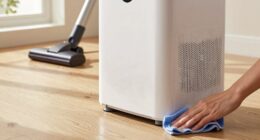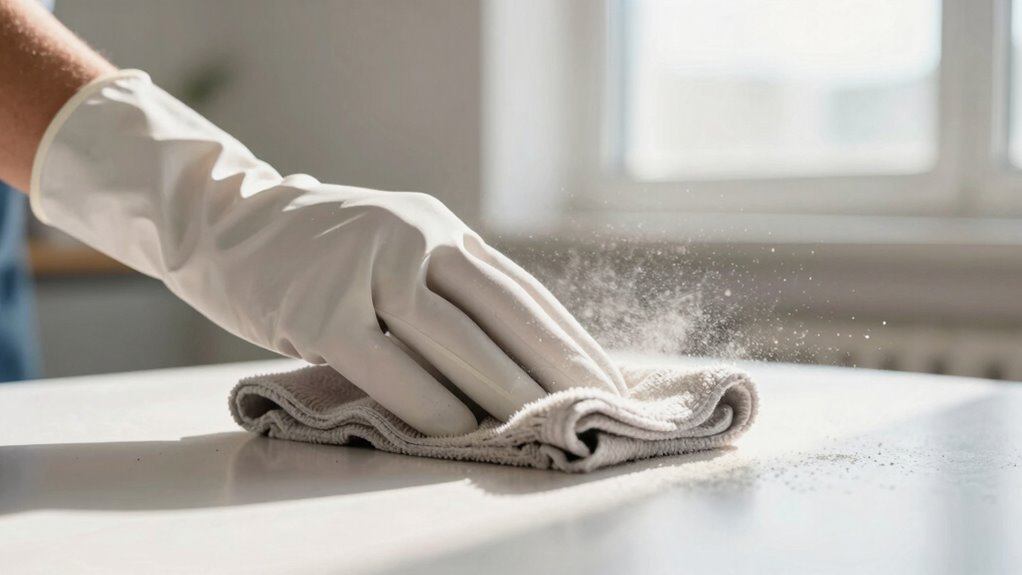

To prevent dust particles from becoming airborne again, start dusting from the top and work downward. Begin with ceiling fans, light fixtures, and shelves to keep dust contained and prevent it from settling on lower surfaces. Use gentle motions and tools like microfiber cloths or extendable dusters for high areas, then move to mid and low surfaces. This top-to-bottom approach minimizes recontamination and keeps your space cleaner longer. Keep going to discover more tips for effective dusting.
Key Takeaways
- Start dusting from the highest surfaces to prevent particles from falling onto lower areas.
- Use gentle, controlled motions to minimize disturbing dust into the air.
- Employ microfiber cloths or damp materials to trap dust rather than dispersing it.
- Dust objects and fixtures carefully to avoid scattering dust particles.
- Finish with lower surfaces to prevent recontamination of already cleaned areas.
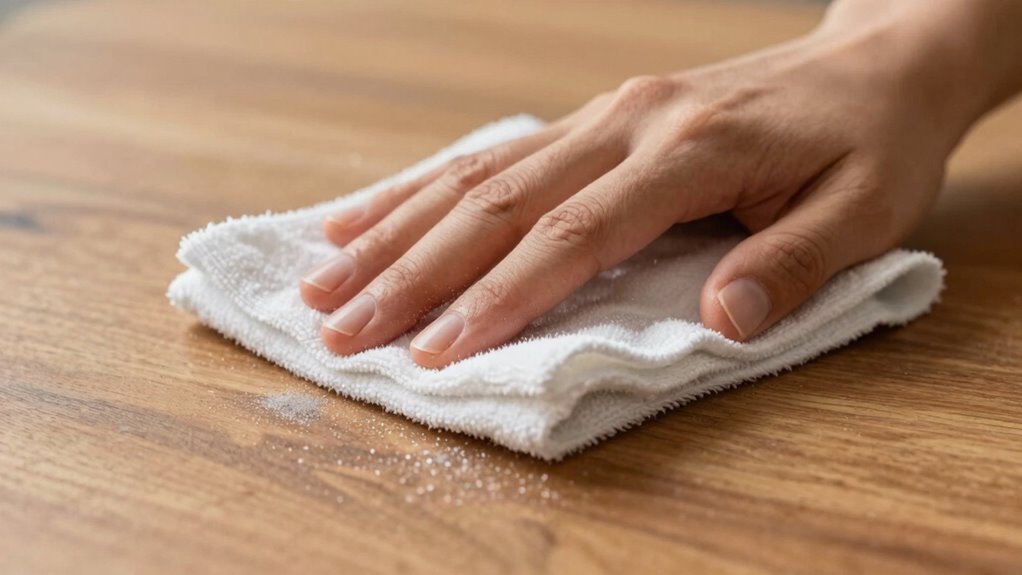
When dusting, following a specific order can greatly reduce the spread of airborne particles. If you start from the top and work your way down, you prevent dust from falling onto already cleaned surfaces, keeping the process efficient and less messy. Use your cleaning tools wisely, opting for microfiber cloths, dusters with extendable handles, or vacuums with HEPA filters to capture dust effectively. These tools are designed to trap dust rather than just move it around, which is essential in controlling dust accumulation and preventing dust particles from becoming airborne again.
Begin by dusting high surfaces like ceiling fans, light fixtures, and shelves. When dusting these areas first, you avoid dislodging particles onto lower surfaces that you haven’t yet cleaned. Use a duster or microfiber cloth to gently remove dust, making sure to reach into corners and crevices. Once the high surfaces are clear, move on to mid-level furniture such as cabinets, desks, and side tables. When you clean these, try to use a damp cloth to trap dust more effectively, reducing the chance of particles becoming airborne during the process. Incorporating airborne dust control techniques can further enhance your cleaning efficiency.
Start dusting from high surfaces to prevent spreading dust onto lower, uncleaned areas.
Next, dust lower surfaces like tables, countertops, and baseboards. These are more likely to gather dust due to their proximity to foot traffic and open spaces. Because dust tends to settle on these surfaces, dusting them last minimizes the chance of redistributing airborne dust particles. Remember to pay attention to areas around electronics and appliances, where dust tends to settle and accumulate rapidly. Using a microfiber cloth or a slightly damp cloth here will help pick up dust without dispersing it into the air. Proper ventilation and air quality management can also reduce dust buildup during cleaning.
Finally, don’t forget to clean objects like picture frames, decor, and vents. These often attract dust and can serve as sources for dust particles to become airborne again if not cleaned thoroughly. When dusting these items, use a gentle, controlled motion to avoid knocking dust into the air. If you’re dealing with stubborn dust, a vacuum with a soft brush attachment can help remove it without kicking up airborne particles. Incorporating air purifiers into your cleaning routine can also significantly improve indoor air quality by trapping airborne dust particles.

USANOOKS Microfiber Cleaning Cloth Grey – 12 Pcs (12.5"x12.5") – High Performance – 1200 Washes, Ultra Absorbent Microfiber Towel Weave Grime & Liquid for Streak-Free Mirror Shine – Car Washing Cloth
10x GRIP-ROOT WEAVE – TRAP MORE, WORK LESS: Ultra-absorbent microfiber towels for car Grip Root weave works like…
As an affiliate, we earn on qualifying purchases.
As an affiliate, we earn on qualifying purchases.
Frequently Asked Questions
How Often Should I Dust to Minimize Airborne Particles?
You should dust at least once a week to minimize airborne particles effectively. Regular dusting reduces dust mite buildup and prevents particles from circulating in your air. Using an air purifier benefits your space by capturing remaining dust and allergens, enhancing air quality. Consistent dusting combined with an air purifier improves dust mite control and keeps your environment healthier, especially for allergy sufferers. Stay proactive for cleaner, safer indoor air.
Are There Specific Tools That Reduce Dust Becoming Airborne?
Yes, using electrostatic dusters and HEPA vacuums can substantially reduce airborne dust. Electrostatic dusters attract and trap particles, preventing them from becoming airborne again as you dust. HEPA vacuums are excellent for removing dust from surfaces and air filters, capturing tiny particles that regular vacuums might miss. Combining these tools during cleaning helps keep dust contained and minimizes the risk of it dispersing into the air.
Can Certain Cleaning Products Help Prevent Dust From Dispersing?
Yes, certain cleaning solutions can help prevent dust from dispersing. Use dust-preventive cleaning solutions designed to trap dust particles rather than spread them around. When you apply these solutions with a microfiber cloth or a damp cloth, they effectively lock in dust, reducing airborne particles. Regularly using dust prevention techniques with appropriate cleaning products keeps your space cleaner and minimizes dust circulation, making your environment healthier and easier to maintain.
Does the Order of Cleaning Different Surfaces Matter?
In the age of steam-powered gadgets, you should prioritize cleaning surfaces from top to bottom. Yes, the order of cleaning matters because it guarantees dust containment and prevents particles from settling again. Start with high, less dusty areas like shelves, then move down to furniture and floors. This surface prioritization keeps dust from spreading, making your cleaning more effective and lessens airborne particles, keeping your space cleaner longer.
How Can I Improve Indoor Air Quality After Dusting?
To improve indoor air quality after dusting, use an air purifier with high effectiveness to filter airborne particles. Combine this with dust trap strategies like wearing a mask and using microfiber cloths to catch dust without dispersing it. Ventilate your space by opening windows, and regularly replace filters. These steps reduce lingering dust, ensuring cleaner air and healthier indoor environments.

DRQ Ceiling Fan Cleaner Duster, Reusable Microfiber Duster with Extension Pole, 13 to 48 Inch Fan Blade Cleaner, Removable Dusters for Cleaning Walls Bookshelves Door Window Top (Blue)
[Easy to Store] The ceiling fan cleaning tools has a hanging hole at the back that is easy…
As an affiliate, we earn on qualifying purchases.
As an affiliate, we earn on qualifying purchases.
Conclusion
By following this dusting order, you’ll keep those pesky particles from taking flight again, much like a meticulous Victorian housekeeper. Remember, start high and work down, and always use a damp cloth to trap dust. This simple routine transforms your cleaning game, ensuring your space stays fresh and sneeze-free. So, channel your inner Marie Kondo, and tidy like a pro—no more airborne dust storms, just a sparkling sanctuary.

Bissell Pet Hair Eraser Allergen Lift-Off with Powerful Suction, HEPA, Tangle-Free Brush Roll, 39883
POWERFUL SUCTION. Dirt, fur & dust don’t stand a chance against the Pet Hair Eraser Allergen Lift-Off vacuum’s…
As an affiliate, we earn on qualifying purchases.
As an affiliate, we earn on qualifying purchases.

Scrub Daddy Damp Duster Towel – Durable Sponge-Like Dust Cleaner for Multisurface Dusting, Picking Up Pet Hair, Dirt & Grime of All Kinds – Reusable, Soft, Flexible, Absorbent Cleaning Supplies (4ct)
Clean Spills Quickly – Instantly upgrade your cleaning supplies with this versatile dust cleaner. The scratch-free, reusable dusting…
As an affiliate, we earn on qualifying purchases.
As an affiliate, we earn on qualifying purchases.